Discover fu — Daoist talismans — through five original works. Follow the changing weight of the brush, then look closer at the meaning held in every form.
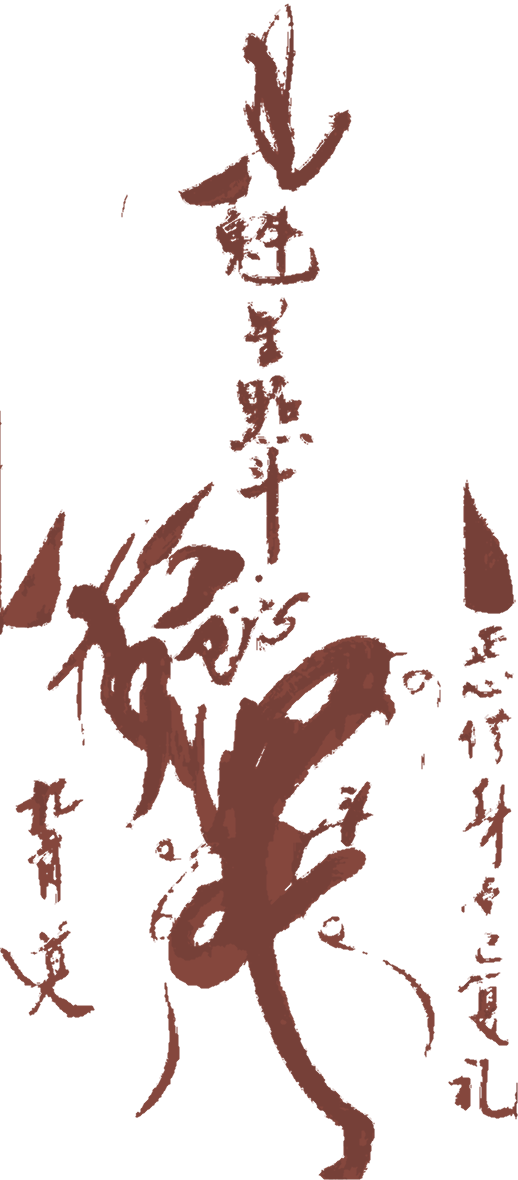
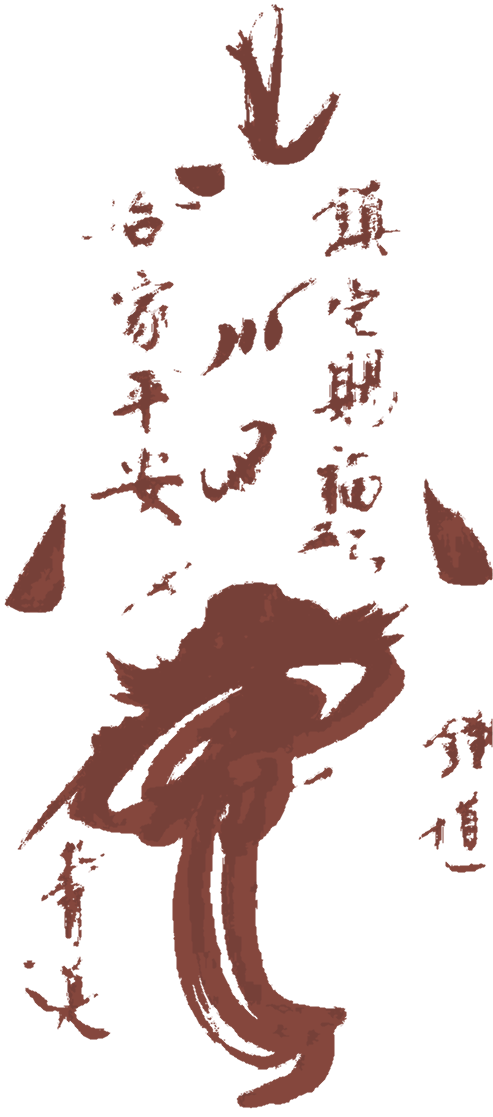
Yellow talisman paper is folded and held within a red pouch bearing the words “Maoshan Shangqing Lingfu.” The pouch gives an annual wish a tangible, personal form.
Two close-up views of the pouch and folded paper. Ask about the complete work, ritual preparation and availability when you inquire.
A digital study of the original brushwork. Switch views to explore the complete scroll.
A clear mind. A lifelong pursuit.
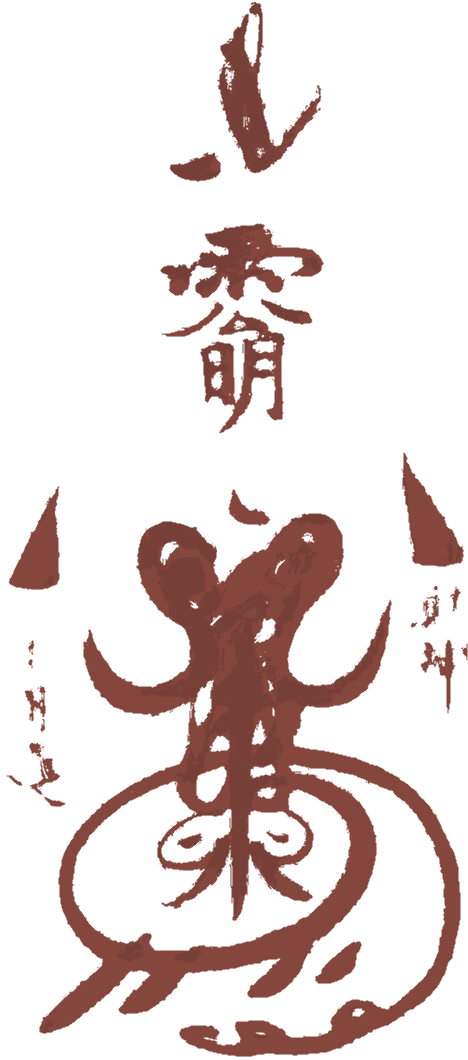
Kui Xing is traditionally associated with scholarship and literary achievement. In this work, an expressive human form carries a wish for clarity, dedication and progress in learning.
Read more about this work +Read the form +
The accompanying eight characters — 正心修身、克己复礼 — speak of setting the heart right, cultivating oneself, practising self-restraint and returning to propriety. The collection’s account reads the figure and the writing together: character becomes form, and form carries meaning.
Its place in everyday life +
Traditionally displayed in a study or a place of learning, and also encountered as a personal talisman. Its meaning embraces study, examinations and the patient work of self-cultivation.
A meeting of Confucian self-cultivation and Daoist talismanic art.
A digital study of the original brushwork. Switch views to explore the complete scroll.
A strong presence. A sheltered home.
The guardian Zhong Kui takes shape in a sweeping, figure-like composition. In the collection’s account, this talisman expresses protection of the household, the welcoming of blessings and care for everyone within it.
Read more about this work +Read the form +
This photograph explicitly names 钟馗 (Zhong Kui). The surrounding inscriptions read 镇宅赐福 and 合家平安 — blessings and protection for the home, and peace for the whole family. The broad turn of the central stroke gives the figure its commanding presence.
Its place in everyday life +
Traditionally mounted as a hanging scroll in a household hall, or placed in an appropriate ritual setting.
A traditional expression of guardianship and family well-being.
A digital study of the original brushwork. Switch views to explore the complete scroll.
For a livelihood that grows with care.
Zhao Gongming, also known as the Xuantan Marshal, is revered as a wealth deity. The rounded, flowing figure gives visual form to wishes for a flourishing livelihood and the careful keeping of prosperity.
Read more about this work +Read the form +
The original names 公明 and 财神. The collection describes sacred names and talismanic writing as held within the deity’s figure. Follow the full, encircling lower stroke: its gathered form gives this work a rhythm of its own.
Its place in everyday life +
Traditionally displayed in an office, shop or business hall, and also in a ritual setting, as a wish for steadiness and prosperity in one’s work.
Prosperity understood as both welcoming and caring for a livelihood.
A digital study of the original brushwork. Switch views to explore the complete scroll.
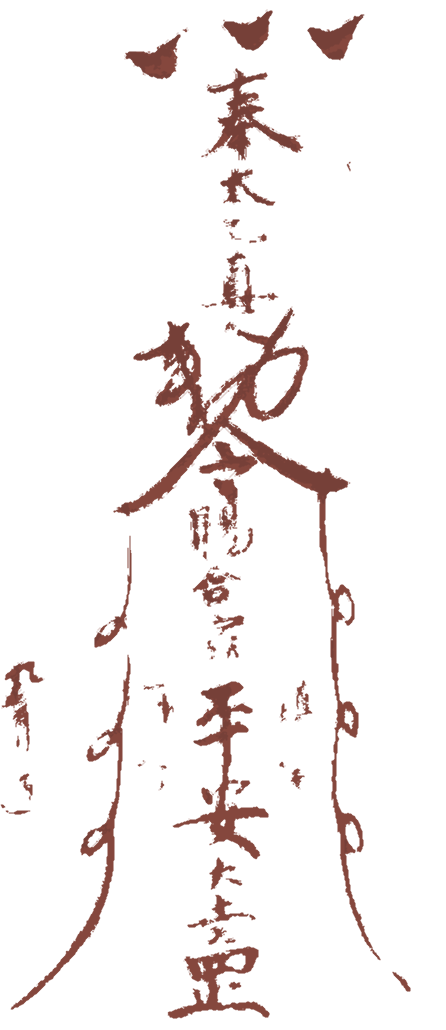
A place of shelter. A wish for those within.
This work invokes Taiyi Zhenren and expresses a wish for a peaceful household. Its tall, open composition gathers blessings for the family within a pair of flowing, protective outlines.
Read more about this work +Read the form +
The central inscription names 太乙真人. Below it, 合家平安 wishes peace for the whole family; 镇宅 and 康宁 evoke the home, well-being and tranquillity. Three upper marks begin the composition, followed by a long central line and curving sides.
Its place in everyday life +
Traditionally mounted as a scroll in the household hall, or placed in an appropriate ritual setting, as an expression of care for home and family.
An invocation of household peace, presented through the work’s own inscription.
A digital study of the original brushwork. Switch views to explore the complete scroll.
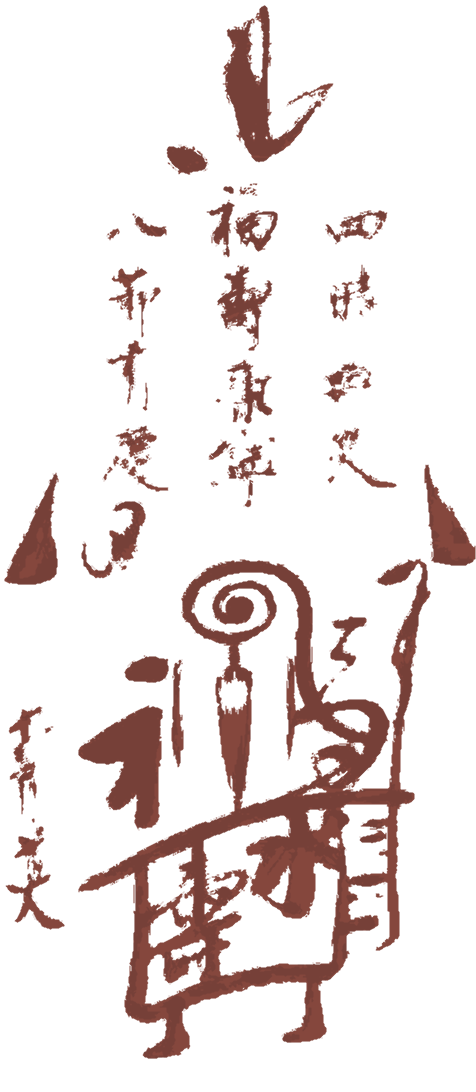
A good life, held in a few carefully written words.
Fu, shou, kang and ning bring together blessings, longevity, well-being and peace. The photographed work places these wishes above a distinctive, figure-like composition.
Read more about this work +Read the form +
The title is read directly from the photograph: 福寿康宁. Beside it, 四时无灾 and 八节有庆 express wishes for safety and celebration through the seasons. The coiled upper line, fine descending marks and broad lower form give the writing a varied cadence.
Its place in everyday life +
A traditional expression of good wishes for a home or a loved one. The meaning of this individual scroll follows its visible inscription.
A wish for a long life lived in well-being and peace.
The lines are taken from the original works, preserving their broad turns, fine edges and open spaces. Each drawing is a digital interpretation of the brushwork; the sequence is not a recording of ritual stroke order.
02 / SHANGQING · THE HUMAN TRUE FORM
Writing becomes presence.
A fu may unite writing, symbolic marks and seals. In the human-form tradition described by the collection, the deity’s figure and talismanic writing become one composition: names and sacred signs are held within a visible form.
Zhenxing means “true form.” In this religious understanding, the figure conveys a sacred presence rather than simply a likeness. Shangqing practice connects such imagery with inward contemplation, known as cunsi, and with a transmitted ritual setting.
These photographed works have their own inscriptions and compositions. Their contemporary forms should not be assumed to reproduce an unchanged design from antiquity.
A visible outline that carries a religious identity.
文 / WRITING
The inscription.
Names, wishes and talismanic marks held within the work.
意 / INTENTION
The contemplation.
The inward attention and tradition behind the brush.
03 / THE REAL BRUSH IN MOTION
The hand. The brush. The living line.
A pause. A turn of the wrist. A line that widens, then lifts away.
Watch an original moment of writing from the Maoshan collection archive.
11 SECONDSORIGINAL FOOTAGE
This film shows an actual brushwork moment. The five animated studies above offer a closer visual reading of the photographed works.
Press play to watch the original brushwork.Visual description
A person sits at a table, writing with a brush on a long sheet of yellow paper. The hand adds marks to a vertical composition. This is a moment of brushwork, not a complete ceremony.
04 / A TRADITION WITH DEEP ROOTS
From contemplation to the written line.
EASTERN JIN · 4TH CENTURY
The Shangqing revelations.
Texts associated with Yang Xi and the Xu family are central to Shangqing’s beginnings. Its sacred world gives a prominent place to inner contemplation and divine presence.
TAO HONGJING · MAOSHAN
A tradition gathered.
Tao Hongjing’s work collecting and organising early Shangqing materials helped establish Maoshan as an enduring centre of the tradition.
THE THREE MOUNTAINS
Distinct roots. Shared history.
Maoshan’s Shangqing, Longhu Mountain’s Zhengyi and Gezao Mountain’s Lingbao are traditionally associated with the Three Mountains of talismanic transmission.
Texts behind the tradition +
These works introduce Shangqing contemplation, sacred forms and transmission. Read them alongside the talismans to understand the wider tradition.
Zhen’gao · 真诰
Tao Hongjing’s compilation of Shangqing revelations.
Shangqing Dadong Zhenjing · 上清大洞真经
A central scripture of the Shangqing Great Cavern tradition.
Yunji Qiqian · 云笈七签
A Northern Song anthology preserving a wide range of Daoist writings.
Maoshan Zhi · 茅山志
Liu Dabin’s record of Maoshan and its religious history.
The supplied cultural account associates this human-form talisman with Jiang Taigong and the familiar saying “Taigong is here; no taboo stands.” It expresses reassurance, the easing of obstacles and good wishes when beginning work or settling a home.
Traditionally displayed in domestic or working spaces. This named tradition is included from the written account; none of these five photographs is labelled as Jiang Taigong.
This talisman’s name expresses a wish for children. It is presented as a religious and cultural tradition, with respect for the personal nature of that hope.
A named tradition from the temple catalogue. An individual work is not identified in this photographic set.
Paper. Wood. Cloth. A close reading of the collection.
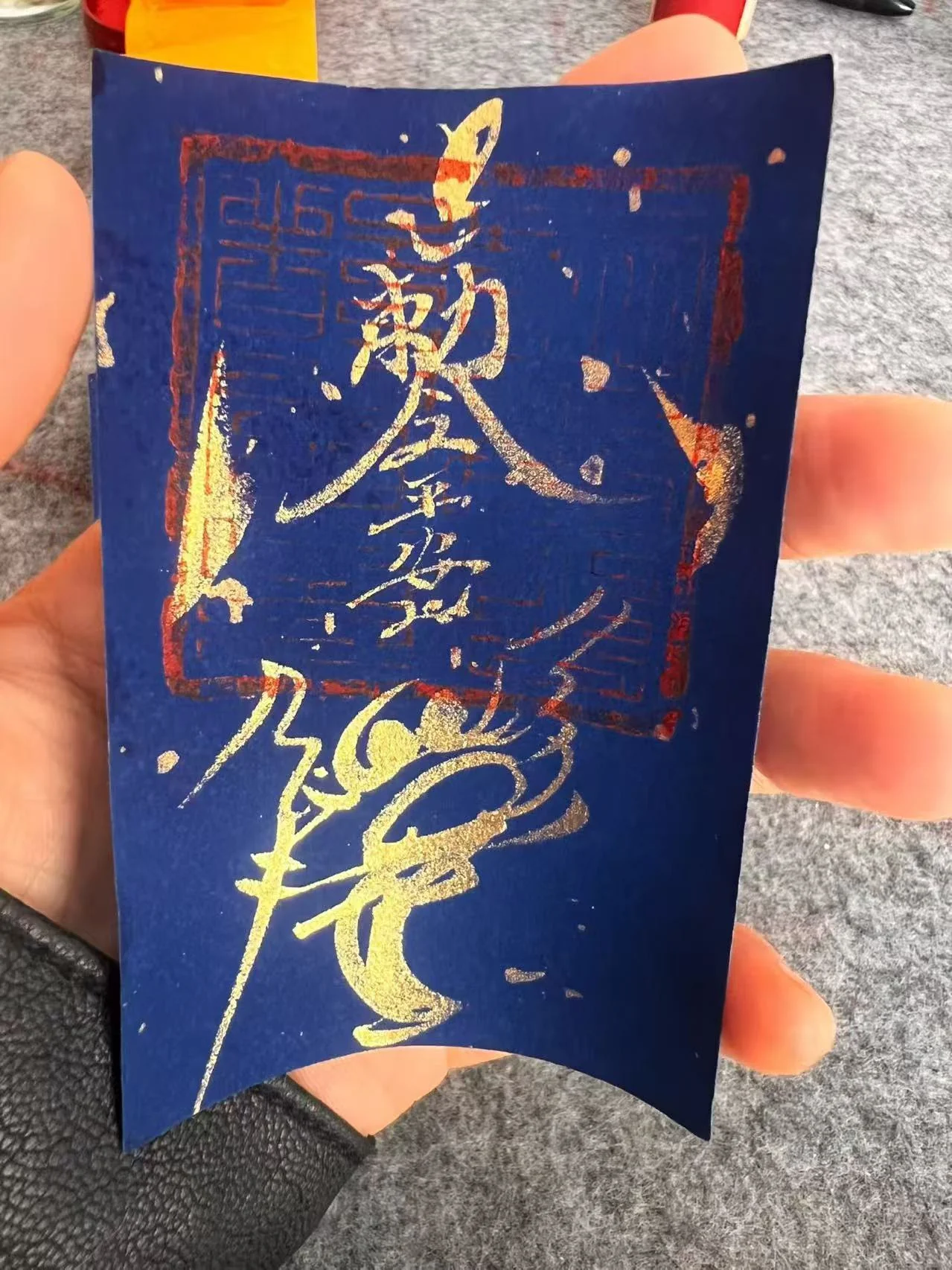
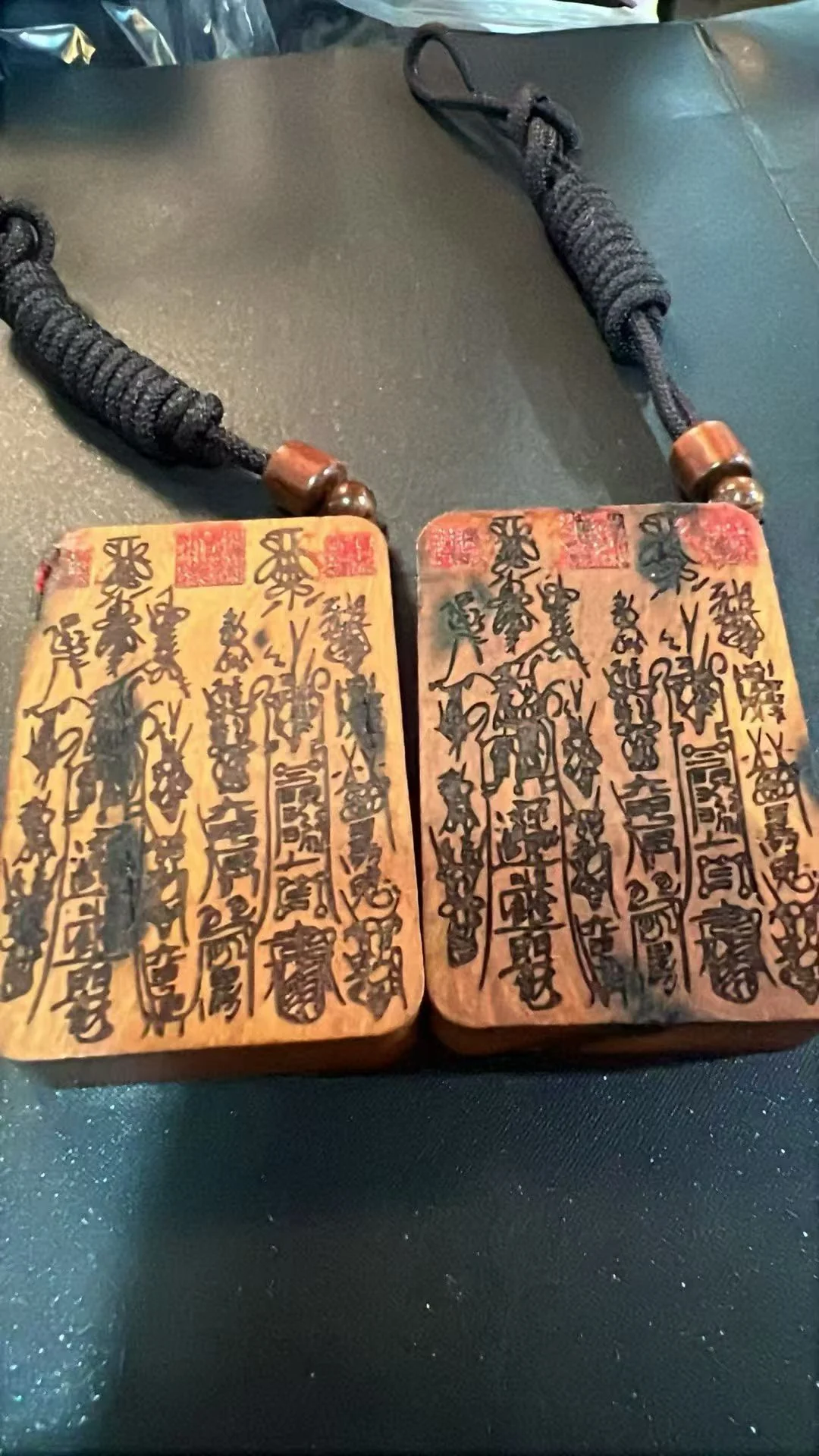
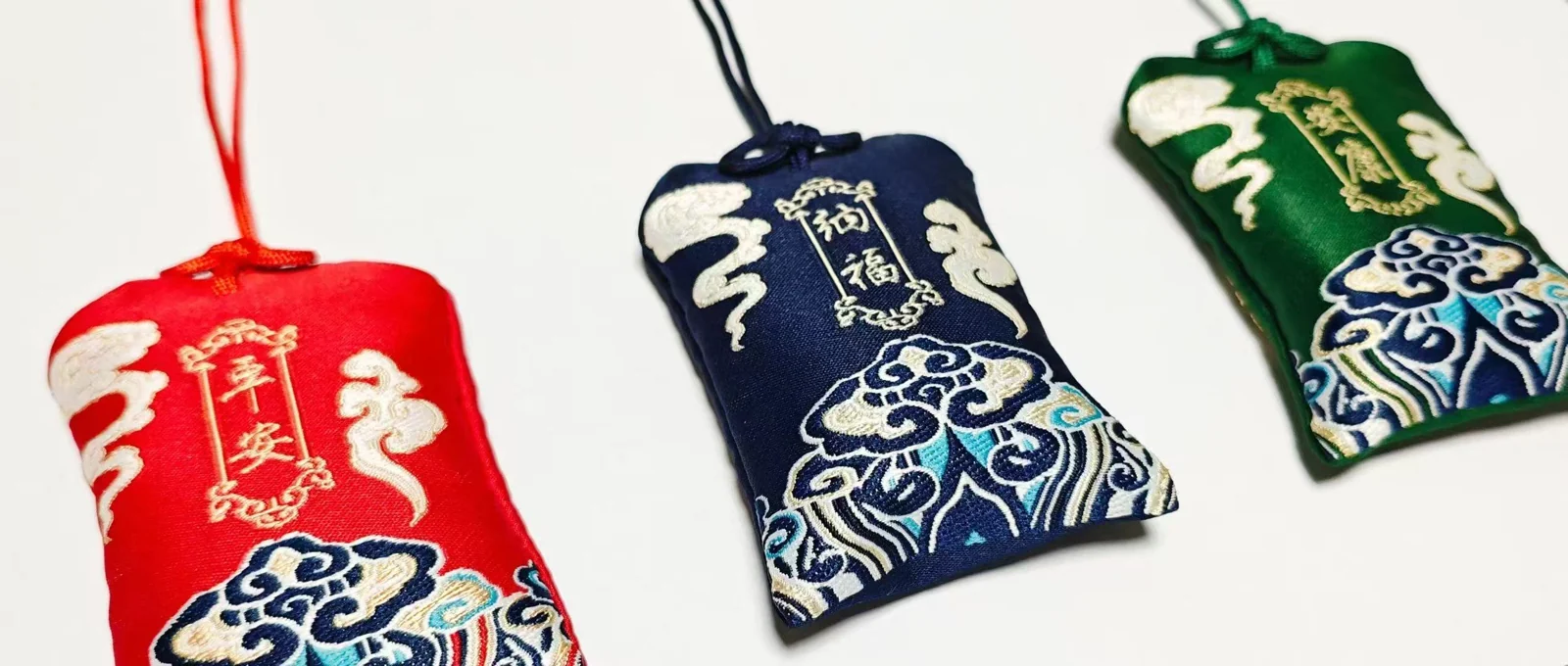
Gold-coloured writing on blue paper brings the gesture of the brush into sharp relief.Inscribed pendants carry a related visual language into an object worn close to the body.Embroidered pouches translate familiar marks into textile and colour.
This guide brings together original collection photographs, supplied cultural notes, an original brushwork film and the Maoshan Daoist Temple’s published catalogue. Traditional meanings are presented as beliefs and good wishes, without promises of particular outcomes. Availability and ritual preparation are confirmed for each object when you inquire.
The five animated studies follow the ink contours visible in the photographs. Their timing, pen movement and reveal sequence are digital interpretations, not authenticated ritual instructions or a reconstruction of the artist’s stroke order. Titles follow legible inscriptions: the second supplied picture reads “Blessings, longevity, well-being and peace”; the fourth explicitly names Zhong Kui. A Jiang Taigong photograph is not identified in this set.