The Three Mao Lords
Sacred origins · three brothers, outside the numbered register
MAOSHAN · HISTORY & LIVING HERITAGE
Across the centuries, people have given this landscape meaning. Follow their stories—from sacred memory to a tradition still being lived.
Unfold the lineageFrom the first Shangqing teachers to the people of the mountain today. Follow the paths of scripture, teaching and temple life—and meet the people behind the names.
Begin with an image. Discover the life behind it.
Select a name to explore the person and their connections.
Sacred origins · three brothers, outside the numbered register
Jin & Southern Dynasties · 1–9
Sui, Tang & Five Dynasties · 10–19
Song & Yuan · 20–45
Jingyi, Qingwei and Huayang administration
Temple life, Fu, music and women’s communities
The overview groups people by period and practice. Only labelled connections indicate a specific relationship; the dotted spine gives historical context.
Based on juan 10–12 of Liu Dabin’s Maoshan Zhi. Every entry can be opened.
The register concludes with Liu Dabin. Explore later documented people in “Branches & today”.
Temple affiliation, shared practice and direct teaching are shown separately.
The Xu manuscripts travelled through upheaval, Ma-family custodianship, and new circles of scholarship.
Xu Xihe continued at the altar; Yu Xiyin taught at Qingcheng. Two pupils, two paths.
Jingyi at Yuanfu and Qingwei alongside Jingyi at Chongxi formed overlapping temple traditions. These people are grouped by records, without an assumed teaching chain.
Teaching relationships explicitly recorded in the national heritage archive.
Other music and liturgy figures · individual teachers are not inferred hereA fully verified generation-by-generation chain from the Ming to today is not available here. Documented people and relationships are shown without filling gaps by inference.
Search by Chinese name, English name or area of contribution.
69 people
SHANGQING REGISTER · 01
魏华存
Lady of the Southern Peak
A foundational female teacher revered in Shangqing. The gazetteer places her first and describes the sacred revelation of scriptures. Her link to Yang Xi represents a religious revelation account, rather than an ordinary meeting between living teachers.
Known by the courtesy name Xian’an, she came from Rencheng. The gazetteer describes her early reading of Laozi and Zhuangzi, marriage and two sons, followed by a more separate life of religious practice once her children had grown.
Later Shangqing tradition revered her as the Lady of the Southern Peak and associated her with the sacred origin of its scriptures. Her biography preserves the authority of a female founder as well as the conventions of religious hagiography.
SHANGQING REGISTER · 02
杨羲
Recorder of the revelations
Yang Xi recorded Shangqing revelations and transmitted texts to the Xu family. His work joins religious practice with manuscript production and calligraphy.
His courtesy name was Xihe; his family moved from the Wu region to Jurong. Xu Mi recommended him for office, and the gazetteer praises his calligraphy. His exchanges with the Xu family produced written records of Shangqing revelations.
His contribution belongs to the formation of the early texts. Copied and preserved within a small circle, these writings passed through the Xu and Ma households before becoming central materials for Tao Hongjing’s later compilations.
SHANGQING REGISTER · 03
许谧
Patron of the early scriptures
Also called Xu Mu. He received and preserved the revelations associated with Yang Xi; with his son Xu Hui, he formed part of the early Shangqing manuscript community.
Also called Xu Mu, with the courtesy name Sixuan, he belonged to a family originally from Pingyu in Runan and later based in the Danyang region. He held civil and military administrative offices; his elder brother Xu Mai also shaped the family’s religious interests.
Together with his son Xu Hui, he received and preserved Yang Xi’s writings. His household provided continuity for collecting and studying them, joining religious learning with the resources of an elite family.
SHANGQING REGISTER · 04
许翙
The Xu family tradition
Son of Xu Mi, known by the childhood name Yufu. His son Xu Huangmin later carried the family scriptures away from upheaval, helping preserve their transmission.
Courtesy name Daoxiang, childhood name Yufu, he was Xu Mi’s third son. The gazetteer describes his refusal of official appointments and retreat to Mount Leiping. He belonged to the central circle around his father and Yang Xi.
His legacy includes both practice and a family manuscript collection. His son Xu Huangmin later moved those manuscripts to safety, making the family’s custody and movement part of the history of transmission.
SHANGQING REGISTER · 05
马朗
Preserving the manuscripts
The gazetteer describes Xu Huangmin depositing family scriptures with the Ma household. Ma Lang’s place in the register reflects manuscript preservation.
Known as Ziming and also as Wengong, he lived at Dongguan in Shan County. During the unrest at the end of the Eastern Jin, Xu Huangmin brought the Shangqing manuscripts to his household for safekeeping.
The account emphasises the conditions under which the books were sealed and could be returned, and his care in honouring the trust. His place in the register recognises custodianship rather than a new body of writings.
SHANGQING REGISTER · 06
马罕
Custodian with Ma Lang
Cousin of Ma Lang and a fellow custodian. The family’s Shangqing manuscripts later reached the court and the circle of Lu Xiujing.
Courtesy name Ziyan, he was Ma Lang’s cousin. His biography belongs to the history of the Ma household’s shared care for the manuscripts deposited by Xu Huangmin.
The collection later reached the Liu Song court and the textual work associated with Lu Xiujing. His significance lies in preservation and circulation: not every figure in the register is known for authorship or temple building.
SHANGQING REGISTER · 07
陆修静
Scripture and ritual organisation
An organiser of Daoist scriptures and liturgy who received materials from the Yang–Xu tradition. His contribution connects Shangqing with the wider textual and ritual world of Daoism.
View larger ↗Known as Master Jianji, he came from Dongqian in Wuxing. His career linked Jiangnan, mountain centres and the Liu Song court, where the Yang–Xu manuscripts entered a broader programme of Daoist textual organisation.
He is remembered for organising the Three Caverns scriptural corpus and ritual rules. Cataloguing and liturgical forms provided durable ways to transmit learning. Sun Youyue studied with him and later instructed Tao Hongjing.
SHANGQING REGISTER · 08
孙游岳
A link between Lu and Tao
Studied with Lu Xiujing and later led Xingshi Guan. The gazetteer records his transmission of Shangqing learning to Tao Hongjing.
Courtesy name Yingda, he came from Dongyang. He studied with Lu Xiujing, was associated with Xiandu and later led Xingshi Guan, a community where practitioners received and studied Daoist teachings.
Tao Hongjing sought instruction and scriptures from him. He is a documented teacher, not simply a name placed between Lu and Tao, and his career shows the role of religious communities in Southern Dynasties transmission.
SHANGQING REGISTER · 09
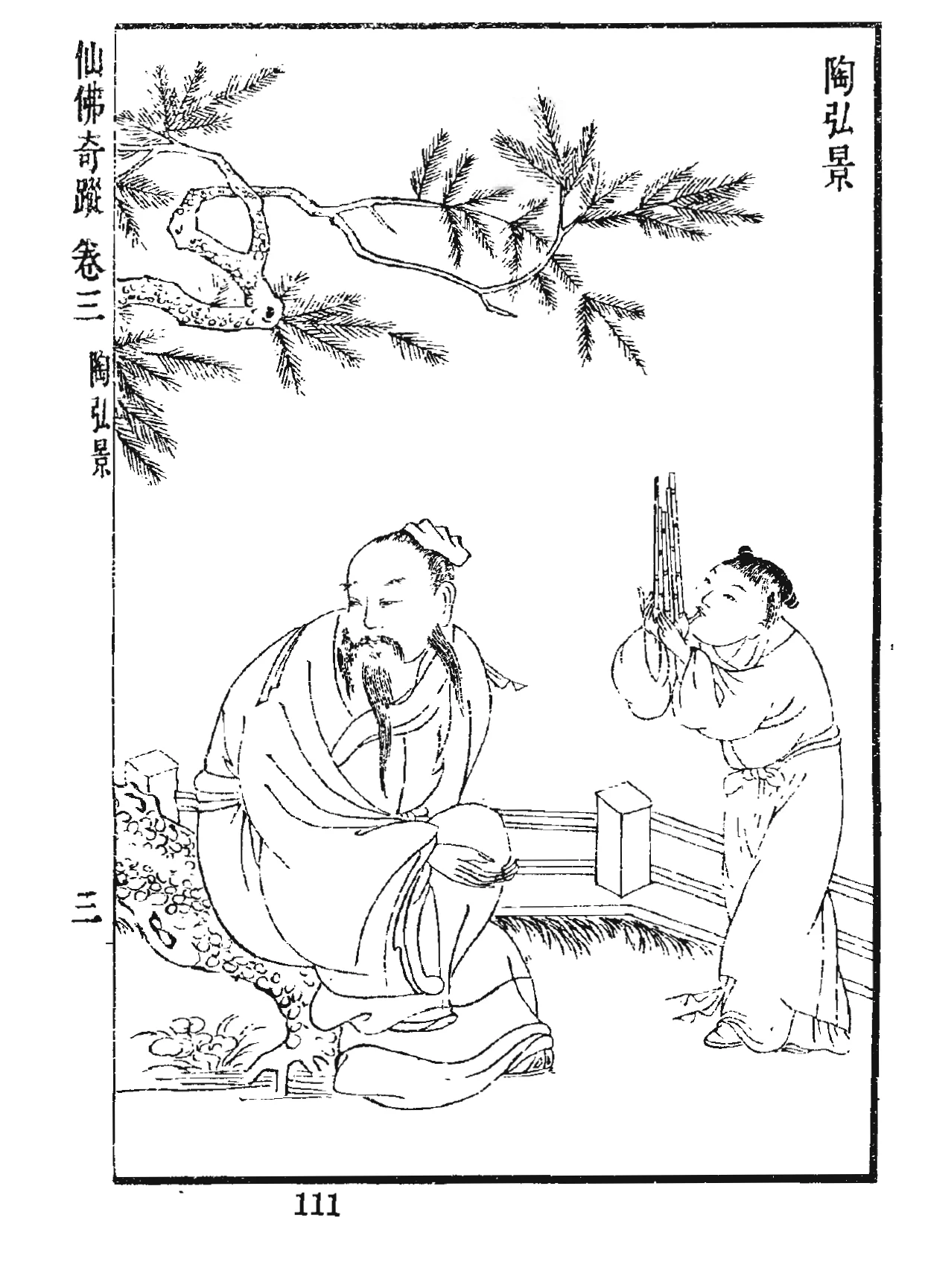
陶弘景
Scholar of Huayang
Collected early Shangqing manuscripts and compiled works including Zhen’gao and Dengzhen yinjue. His scholarship helped make Maoshan a centre for scripture, contemplation and the study of materia medica.
View larger ↗Courtesy name Tongming, he styled himself the Recluse of Huayang. After service at the Southern Qi court, he retired to Maoshan. He studied with Sun Youyue and sought early manuscripts from several collectors, organising mountain life around retreat, disciples and visitors.
Zhen’gao assembled the early revelation records, while Dengzhen yinjue organised materials on practice. His work combined attention to textual provenance with religious cultivation and the study of medicines. Correspondence with the Liang court formed another part of his mountain life.
SHANGQING REGISTER · 10
王远知
Shangqing in the Sui and Tang
Active between mountain communities and the Sui–Tang courts, and teacher of Pan Shizheng. He follows Tao in the register, but the gazetteer names Zang Jin as his teacher; the two relationships are kept distinct.
Courtesy name Deguang, from Linyi in Langya, he lived across the Chen, Sui and Tang periods. The gazetteer names Zang Jin as his teacher in learning associated with Tao Hongjing. His later career involved the courts and the development of Taiping Guan at Maoshan.
He taught Pan Shizheng, extending this line of learning to Mount Song. His position after Tao in the register and his documented study under Zang Jin describe different relationships, both necessary to understand the transmission.
SHANGQING REGISTER · 11
潘师正
Teaching at Mount Song
Disciple of Wang Yuanzhi, later based at Mount Song. His teaching of Sima Chengzhen carried Shangqing practice beyond Maoshan.
Courtesy name Zizhen, from Zongcheng in Beizhou. The biography describes his mother teaching him the Daodejing, followed by study with Wang Yuanzhi. He later lived at Mount Song, including Shuangquan and Xiaoyao Valley.
Although honoured by the Tang court, the biography stresses his preference for mountain life and modest needs. His student Sima Chengzhen helped carry this learning onward to Tiantai and Wangwu.
SHANGQING REGISTER · 12
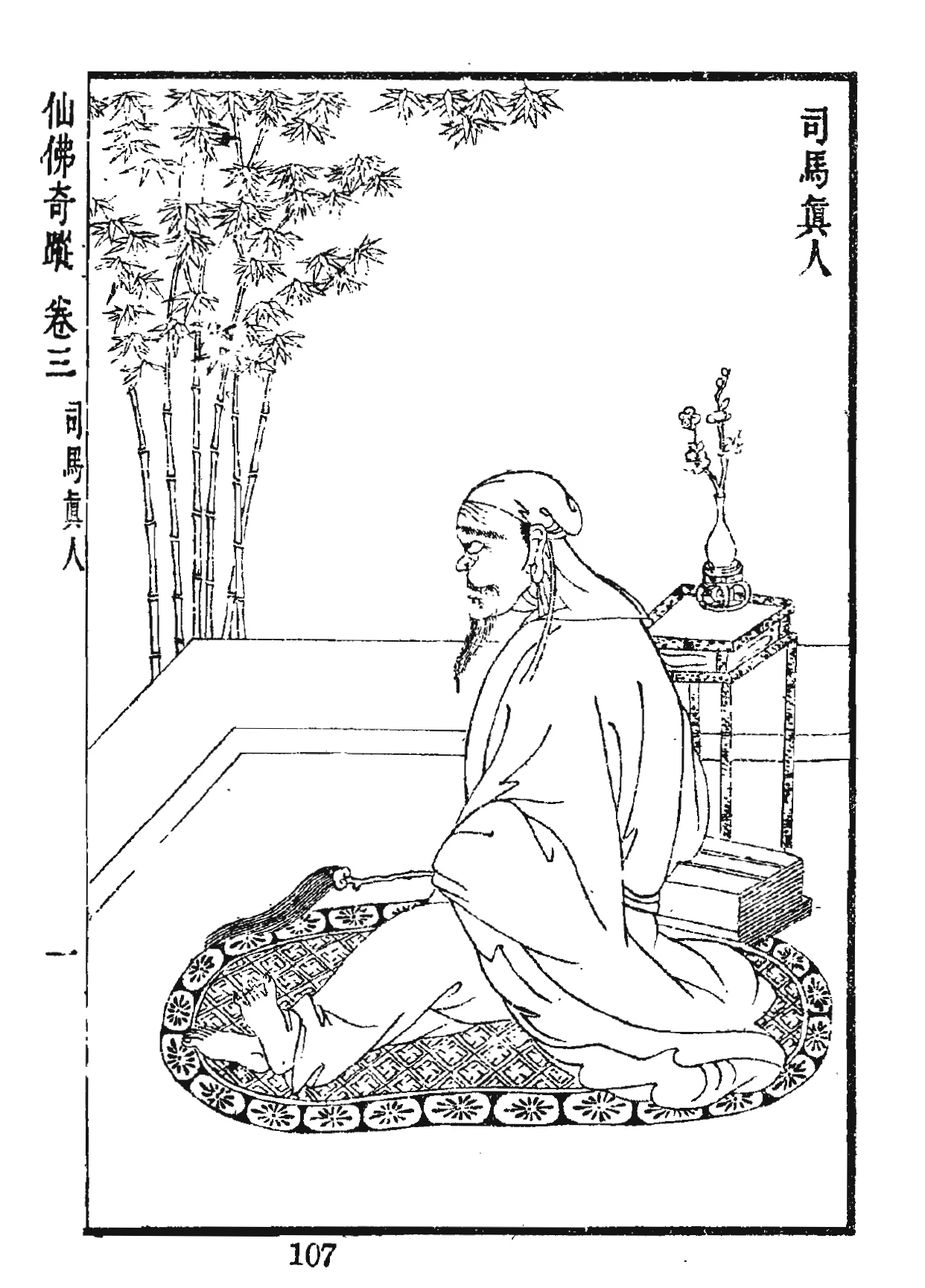
司马承祯
The teaching of sitting in oblivion
Student of Pan Shizheng and author of Zuowang lun. His teaching developed contemplative practice at centres including Tiantai and Wangwu; Li Hanguang studied with him.
View larger ↗Courtesy name Ziwei, also known as Daoyin, he came from Wen County. He studied with Pan Shizheng in youth and later moved among Tiantai, Wangwu and the Tang court. Yangtai Guan at Wangwu was an important later base.
Zuowang lun is a key text for his contemplative teaching, concerned with gathering the mind, simplifying affairs and cultivating stillness. He was also admired for calligraphy; the gazetteer records his work writing the Daodejing.
SHANGQING REGISTER · 13
李含光
Recovering Shangqing scriptures
Student of Sima Chengzhen, later associated with Ziyang Guan at Maoshan. The gazetteer credits him with recovering dispersed manuscripts and renewing textual study.
From Jiangdu in Guangling, he encountered Huang–Lao learning through his father and later studied with Sima Chengzhen. Despite imperial recognition, he returned to Ziyang Guan at Maoshan to recover texts and teach.
The biography credits him with finding dispersed Shangqing manuscripts and supplementing missing materials. His work continued the long history of textual recovery, alongside register transmission and an ethical concern with conduct and helping others.
SHANGQING REGISTER · 14
韦景昭
Registers at Ziyang Guan
Trained first in Lingbao learning, then studied with Li Hanguang and received Shangqing registers: an example of overlapping textual traditions.
From Yanling in Danyang, he studied Confucian writings but did not pursue the examinations. He first learned Lingbao teachings from Bao Shirong and later joined Li Hanguang at Maoshan.
His biography situates the safeguarding of scriptures and registers amid Tang unrest. His study of both Lingbao and Shangqing illustrates how religious learning crossed the boundaries suggested by later school labels.
SHANGQING REGISTER · 15
黄洞元
A travelling practitioner
Associated with Li Hanguang and active at Wuling and Lushan before practising at Maoshan’s Xiabo Palace, where the gazetteer links him with Wei Jingzhao’s learning.
His recorded places include Nanyue, Taoyuan Guan at Wuling, Zixiao Peak at Lushan and Xiabo Palace at Maoshan. Connections with Li Hanguang and the learning following Wei Jingzhao place him within a mobile network of practitioners.
The biography highlights his recitation and study of Great Cavern scripture. Sun Zhiqing subsequently studied with him, linking this retreat practice to the next generation’s teaching and temple responsibilities.
SHANGQING REGISTER · 16
孙智清
Temple order and mountain protection
Student of Huang Dongyuan, responsible for temple order. The record associates him with restrictions on hunting and the protection of the sacred landscape.
A student of Huang Dongyuan, he served as Maoshan’s official responsible for religious order under Emperor Wenzong. The record describes his petitions in the 830s to restrict hunting and capture on the mountain.
His work connects religious transmission with care for the mountain environment. Temple order, ritual service and teaching were overlapping responsibilities; his student Wu Fatong carried the learning into the late Tang.
SHANGQING REGISTER · 17
吴法通
Master Xiwei
Received teachings from Sun Zhiqing. Accounts of register transmission in Emperor Xizong’s reign show continuing links with the late Tang court.
From Danyang, he first pursued an examination career before studying Daoism with Sun Zhiqing. His biography records late Tang imperial recognition and later withdrawal during political change.
Register transmission in Emperor Xizong’s reign demonstrates the altar’s court connections. His instruction of Liu Dechang offers a more personal view: directing literary talent toward sustained religious practice.
SHANGQING REGISTER · 18
刘得常
Retreat at Ziyang Guan
Sought instruction from Wu Fatong and spent many years at Ziyang Guan. The biography emphasises restraint and contemplative practice.
From Jinling, he approached Wu Fatong as a young man with a poem on the Great Dao and became his student. He later spent many years at Ziyang Guan, where the biography associates him with poetry and retreat.
His teacher urged him to move beyond literary display toward substance. That shift from poetic aspiration to disciplined practice gives his account a distinctive emphasis within a register often concerned with offices and court patronage.
SHANGQING REGISTER · 19
王栖霞
Shangqing in the Southern Tang
Also known as Jingzhen. Studied after moving south, receiving Great Cavern teachings from Deng Qixia, and worked between Maoshan and Jinling.
Also called Jingzhen, with the courtesy name Xuanyin. Moving south at the end of the Tang, he sought instruction from figures including Nie Wenzheng and Deng Qixia, receiving Great Cavern teachings before becoming associated with Xuanzhen Guan in Jinling.
His named teachers reveal sources of learning outside the numbered register. His student Cheng Yanzhao lived through the transition from Southern Tang to Song, carrying the tradition into the new dynasty.
SHANGQING REGISTER · 20
成延昭
Master Chongxu of Ziyang
Student of Wang Qixia who lived through the transition to Song rule. Served in Daoist administrative roles before returning to teach at Ziyang Guan.
Courtesy name Huaiyu, from Jintan, he studied with Wang Qixia. Around the transition from Southern Tang to Song, he held responsibilities for Maoshan and Daoist affairs in Shengzhou, later returning to teach at Ziyang Guan.
His instruction of Jiang Yuanji is explicitly recorded. His career shows teaching within a religious community continuing alongside changes in political authority and religious administration.
SHANGQING REGISTER · 21
蒋元吉
Text and oral instruction
Received Shangqing teachings from Cheng Yanzhao. Their recorded dialogue distinguishes written scripture, oral instruction and the choice of a successor.
Courtesy name Jifu, styled Bixuzi, he came from Yixing and a family associated with medicine. He was also a writer, studying with Cheng Yanzhao and moving between Maoshan and the court.
A recorded dialogue with his teacher distinguishes scripture, oral guidance and the choice of a suitable recipient. His transmission to Wan Baochong in 998 supplies a dated instance of that process.
SHANGQING REGISTER · 22
万保冲
Master Chongsu
Entered Tengxian Guan and later studied with Jiang Yuanji. The gazetteer dates his succession to 998 and describes a later retreat at Black Tiger Valley.
Courtesy name Yongxuan, from Wujin, he was raised by an elder brother. The biography describes his refusal of inherited property, entry into Tengxian Guan and subsequent study with Jiang Yuanji.
His succession in 998 and later retreat to Black Tiger Valley are central episodes. The biography presents religious responsibility and a preference for a simple, secluded life as complementary parts of his character.
SHANGQING REGISTER · 23
朱自英
Court and temple patronage
Associated with Yuqing Zhaoying Palace and the development of Qianyuan and Tiansheng temples. The register places him twenty-third; Mao Fengrou studied with him.
Courtesy name Yinzhi, from Zhuyangli. After entering Daoist life, he travelled to places including Qingcheng in search of older scriptures. His later career connected him with the Northern Song court and Yuqing Zhaoying Palace.
He is associated with the development of Qianyuan and Tiansheng temples, and with teaching Mao Fengrou. Manuscript study, court connections and construction together supported Maoshan’s Northern Song religious community.
SHANGQING REGISTER · 24
毛奉柔
Teaching at Mount Jijin
Studied with Zhu Ziying and lived at Mount Jijin. The gazetteer records his transmission of teachings to Liu Hunkang.
From Jurong, he studied with Zhu Ziying and later established a retreat at Mount Jijin. The gazetteer emphasises a modest way of life, a gentle manner and sustained religious practice.
Liu Hunkang came to him for instruction. This documented relationship connects the small retreat at Mount Jijin with the later growth of Yuanfu Palace, whose institutional history rested on an earlier teaching relationship.
SHANGQING REGISTER · 25
刘混康
Master Jingyi and Yuanfu Palace
Student of Mao Fengrou. His retreat became Yuanfu Guan and then Yuanfu Wanning Palace. His tenure linked scripture, ritual insignia and temple institutions; the later Jingyi lineage recalls his title.
From Jinling in the Changzhou region, he first studied under Tang Hanxiang at Taihe Guan and later sought instruction from Mao Fengrou. With Northern Song patronage, his Qianshen retreat developed into Yuanfu Guan and then Yuanfu Wanning Palace.
Imperial gifts of scriptures and ritual insignia accompanied temple construction, bringing textual, ritual and institutional authority together. Transmission continued through Da Jingzhi’s circle, while Liu’s title Jingyi became significant to later lineage memory.
SHANGQING REGISTER · 26
笪净之
Ritual compilation and temple care
Succeeded Liu Hunkang and worked on ritual texts, temple affairs and charitable relief. Xu Xihe continued at the altar; Yu Xiyin carried teachings to Qingcheng.
Courtesy name Zhiyuan, from Jinling, he entered Liu Hunkang’s circle as a child. While Liu was at court, he managed affairs at Yuanfu; his responsibilities later also included Chongxi Guan.
The record includes ritual compilation and relief work. Xu Xihe continued at Maoshan, Yu Xiyin taught at Qingcheng, and Jiang Jingche also studied with him. Their different paths explain the branching shape of transmission.
SHANGQING REGISTER · 27
徐希和
Master Yangsu Guanmiao
Student of Da Jingzhi who inherited the altar’s insignia during the transition between Northern and Southern Song. A fellow disciple of Yu Xiyin.
Courtesy name Zhonghe, from Lishui, he studied with Da Jingzhi. His succession involved imperial appointment and fell in the unsettled final years of the Northern Song.
He and Yu Xiyin belonged to the same teaching circle but followed different institutional paths. Their relationship makes clear why the history is broader than a succession of abbots at a single temple.
SHANGQING REGISTER · 28
蒋景彻
Rebuilding after conflict
Studied in Da Jingzhi’s circle and travelled to Emei. Preserved scriptures and ritual insignia during conflict and helped rebuild Yuanfu Palace.
Courtesy name Tonglao, from Jurong, he entered Da Jingzhi’s circle in youth and later studied with Yu Xiyin at Emei. During the wars at the beginning of the Southern Song, he safeguarded scriptures, registers and the altar insignia.
He subsequently gathered support to rebuild Yuanfu Palace. Preservation became institutional recovery, continued by his student Li Jinghe’s work restoring ritual arrangements after the court’s move south.
SHANGQING REGISTER · 29
李景合
Master Chongde
Also written Li Jinghe with the character 和. Student of Jiang Jingche; helped restore ritual order after the Song court moved south, and is remembered for charitable healing.
Courtesy name Lingyun, from Jurong, he studied with Jiang Jingche. His career belonged to the reorganisation of court and altar ceremonies after the Song court moved south.
The biography also remembers his distribution of medicines. His younger brother Li Jingying later entered religious life, adding a family connection to the account without by itself proving a direct teaching relationship.
SHANGQING REGISTER · 30
李景瑛
Master Jingzhen
Younger brother of Li Jinghe, whom he followed into Daoist life. Remembered for retreat, frugality and declining repeated court invitations.
Courtesy name Linghui, he was Li Jinghe’s younger brother. The biography says he first cared for his mother and entered Daoist life in middle age, later becoming known for quiet and frugal mountain practice.
He repeatedly declined invitations from the court. His student Xu Shoujing continued this contemplative approach, representing a strand of the tradition centred on retreat rather than sustained court activity.
SHANGQING REGISTER · 31
徐守经
Master Baoning Chongmiao
Student of Li Jingying who continued his contemplative approach. Later entrusted the insignia to Qin Ruda and withdrew from office.
From Lishui, he studied with Li Jingying. His account centres on retreat and stillness, alongside responsibility for identifying a successor to the altar.
He invited Qin Ruda to the mountain and, after discussion, entrusted him with the insignia before withdrawing. The episode presents succession as a judgement about learning and character.
SHANGQING REGISTER · 32
秦汝达
Master Mingjiao
From Jiangyin, invited to Maoshan by Xu Shoujing. The account of his succession identifies Xing Rujia as a disciple called back to inherit the altar.
Courtesy name Tongyuan, from Jiangyin. The biography describes study despite poverty, using discarded paper and brushes, followed by travel in search of learning. An invitation from Xu Shoujing brought him to the Maoshan altar.
Near the end of his life he called his student Xing Rujia back to inherit the altar. Read beside Xu Shoujing’s earlier invitation, the account documents two successive acts of choosing and entrusting a recipient.
SHANGQING REGISTER · 33
邢汝嘉
Master Zhenying
Student of Qin Ruda and a court-affiliated Daoist. His biography highlights grain storage and relief in anticipation of famine.
Courtesy name Zijia, from Lishui, he served in a court religious capacity before Qin Ruda called him back to succeed at Maoshan. The record includes imperial recognition and gifts of ceremonial dress.
His late-life provision of grain storage benefited people during famine. This practical attention to food and relief makes the social role of the altar visible alongside scriptures and religious titles.
SHANGQING REGISTER · 34
薛汝积
Master Chongxuan Mingyi
Originally named Kezhao. Studied the Changes and Lao–Zhuang texts, and continued Xing Rujia’s tradition. Some electronic transcriptions render his surname as Sa; this variation is retained in the editorial notes.
Courtesy name Defu, earlier called Kezhao and Mingfu, he came from Jinling in the Changzhou region. He studied the Changes and Lao–Zhuang texts and maintained a long association with Xing Rujia.
His career also reflects continued Song court interest in Great Cavern teaching. Electronic transcriptions sometimes use the surname Sa; this site keeps Xue Ruji as its display name while retaining the variant for comparison.
SHANGQING REGISTER · 35
任元阜
Master Tongling Zhidao
From Lishui, succeeding to teachings associated with Xue Ruji. The biography combines court invitations with the distribution of gifts to people in need.
Courtesy name Shanfu, from Lishui, he received teachings from Xue Ruji. Repeated Southern Song court invitations connected his mountain community with imperial religious affairs.
The biography describes gifts being used for relief. Jing Yuanfan studied with him as a child, a teaching relationship that crosses several positions in the register rather than following its immediate order.
SHANGQING REGISTER · 36
鲍志真
Master Mingwei
Entered Maoshan from a family of Confucian learning. Associated with ritual service and a later retirement to Peizhen Guan.
Courtesy name Chunfu, from Lishui, he entered Daoist life from a family of Confucian learning. His ritual service included commemorating the war dead, reflecting the public role of temples during Southern Song conflict.
He later petitioned to retire and settled at Peizhen Guan for reading and practice. Tang Zhidao became his student through an introduction, continuing the teaching beyond his period in office.
SHANGQING REGISTER · 37
汤志道
Master Lingbao
Lived for years at Great Mao Peak, then studied with Bao Zhizhen and received the altar insignia. The biography stresses humility in his response to ritual success.
From Danyang, he spent many years at Great Mao Peak before Zhao Shanxiang introduced him to Bao Zhizhen. He later received the altar insignia, following a long period of mountain practice.
When praised after rain rites, the biography has him credit concern for the people rather than claim personal supernatural power. The episode expresses an ideal of humility; his student Jiang Zongying continued through scriptural scholarship.
SHANGQING REGISTER · 38
蒋宗瑛
Scholar and traveller
Student of Tang Zhidao and commentator on Great Cavern texts. His students included Liu Zonghe and Xu Daoqi, showing why succession order and teaching relationships must be distinguished.
Courtesy name Dayu, styled the Daoist of the Jade Sea, he came from Piling. Initially preparing for an official career, he turned toward Daoist learning after reading Dengzhen yinjue and studied with Tang Zhidao. His travels included Lushan, Tianmu and Yongjia.
The gazetteer records his commentary on the Great Cavern scripture, showing continuing interpretation of early Shangqing texts. Liu Zonghe and Xu Daoqi were both his students, making this part of the tradition a branching network.
SHANGQING REGISTER · 39
景元范
Master Jiayan
Studied with Ren Yuanfu and later served at Jiankang and the court before leading the altar. His teacher was not the immediately preceding figure in the register.
Courtesy name Zhongmo, from Juqu, he studied with Ren Yuanfu in childhood and later served at Tianqing Guan in Jiankang, with further connections to court religious affairs. His altar appointment involved imperial direction.
He also retired to practice at Yuanyang Guan. His study with Ren Yuanfu despite appearing after Jiang Zongying illustrates the distinction between institutional succession, register order and a personal teacher.
SHANGQING REGISTER · 40
刘宗和
Master Yuanjing
Disciple of Jiang Zongying who travelled with him to Lushan. Juan 12 records Zonghe; some later lists give Zongchang. Both forms are noted for comparison.
From Lishui, he studied with Jiang Zongying in youth and accompanied him to the court and Lushan. Family mourning interrupted these travels, after which he returned to Maoshan.
The account emphasises his preference for mountain practice over office. The name appears as Zonghe or Zongchang in different lists; this page follows juan 12 while preserving the alternative for readers.
SHANGQING REGISTER · 41
王志心
Restoring the altar’s succession
Student of Tang Yuanzai. Credited with returning the altar insignia to Maoshan, declining office, and later receiving recognition in the lineage: a reminder that the register is not simply a list of abbots.
From Jintan, he studied with Tang Yuanzai at Yuanfu Palace. When the altar insignia were removed elsewhere, he worked to have them returned to Maoshan, an action the biography treats as a restoration of the altar.
He declined to take the altar office himself and was later honoured as a master who restored its proper succession. His inclusion demonstrates that the register is not simply a list of people who served as abbot.
SHANGQING REGISTER · 42
翟志颖
Master Guanmiao
From Danyang, associated with bringing Jiang Zongying back from Yongjia. His life belongs to the transition from Song to Yuan rule.
Courtesy name Tongshu, from Danyang, he was active near the end of the Southern Song. The biography describes his welcome to Jiang Zongying on his return from Yongjia and his role in the altar’s continuity.
The record stresses frugality and kindness against the upheaval of the Song–Yuan transition. These specific surviving details are the basis for his profile; no otherwise unattested works are assigned to him.
SHANGQING REGISTER · 43
许道杞
Master Xu Daoqi
Student of Jiang Zongying who received Yuan patronage and administered Maoshan religious affairs. The gazetteer records his transmission to Wang Daomeng.
Courtesy name Zuyu, from Jurong, he studied with Jiang Zongying. In the early Yuan he helped restore religious affairs after warfare, with imperial support and responsibilities involving the Three Mao mountains.
He entrusted the succession to Wang Daomeng during the Zhiyuan reign. His career links a Southern Song teaching community with the recovery of temples under Yuan rule.
SHANGQING REGISTER · 44
王道孟
Master Wang Daomeng
Studied first with Shen Zongshao, then received Xu Daoqi’s teachings. On retirement he appointed his disciple Liu Dabin to continue the tradition.
Courtesy name Muzhai, from Jurong, he first studied with Shen Zongshao and later joined Xu Daoqi’s circle. His activities included rites in Yangzhou during a year of hardship, extending beyond Maoshan itself.
He later withdrew and entrusted the altar to Liu Dabin. The record distinguishes an early teacher, later receipt of the succession and his own eventual successor.
SHANGQING REGISTER · 45
刘大彬
Compiler of Maoshan Zhi
Student of Wang Daomeng and compiler of Maoshan Zhi. His work preserves temples, inscriptions and lineage memory. The forty-five-person register ends with him; the tradition itself does not.
Styled Yuxuzi, from Qiantang, he followed Wang Daomeng at the Maoshan altar. His career involved Yuan imperial recognition, the return of ritual seals and the organisation of temple records.
His compilation of Maoshan Zhi preserved the mountain’s places, institutions, people and traditions. Its Shangqing biographies underpin this site’s forty-five entries. The register ends here because of that source’s scope, not because later transmission ceased.
PEOPLE OF MAOSHAN · Sacred tradition
茅盈
Elder Mao Lord
Eldest of the Three Mao brothers in sacred tradition, associated with cultivation at Mount Juqu and the name Maoshan. Shown as a sacred origin, outside the forty-five-person register.
PEOPLE OF MAOSHAN · Sacred tradition
茅固
Middle Mao Lord
One of the Three Mao Lords revered at the mountain. The three figures are brothers in sacred tradition, rather than successive generations.
PEOPLE OF MAOSHAN · Sacred tradition
茅衷
Younger Mao Lord
One of the Three Mao brothers, central to local temple worship. The Mao cult and Shangqing learning meet within the same sacred landscape.
PEOPLE OF MAOSHAN · Late Jin–Liu Song
许黄民
Carrier of the Xu manuscripts
Son of Xu Hui, who carried the family scriptures away from unrest and deposited them with the Ma household. Essential to the manuscript story despite having no numbered place in the register.
Son of Xu Hui, he inherited the Xu family’s Shangqing manuscripts. Fleeing unrest at the end of the Eastern Jin, he carried them to the Ma household in Shan and entrusted them to Ma Lang.
His movements explain how the manuscripts passed from the Xu to the Ma family. Although unnumbered in the register, he is essential to the documented chain of textual custody.
PEOPLE OF MAOSHAN · Southern Dynasties
臧矜
Teacher of Wang Yuanzhi
Juan 10 identifies Zang Jin as Wang Yuanzhi’s teacher and links that study to Tao Hongjing’s learning. Included to distinguish teaching from numbered succession.
The biography of Wang Yuanzhi names Master Zongdao, Zang Jin, as his teacher in learning associated with Tao Hongjing. Personal details are sparse in the cited record, but this explicit connection prevents register order from being mistaken for direct teaching.
PEOPLE OF MAOSHAN · Song
俞希隐
Teaching at Qingcheng
A fellow disciple of Xu Xihe under Da Jingzhi. The gazetteer describes his teaching at Qingcheng, documenting a branch beyond Maoshan.
An inner disciple of Da Jingzhi and fellow student of Xu Xihe, his activity extended from Jiangnan to the Qingcheng and Emei region of Sichuan.
The gazetteer records his teaching at Qingcheng and, in Jiang Jingche’s biography, the latter’s study with him at Emei. Together these accounts identify both places and a recipient of instruction.
PEOPLE OF MAOSHAN · Late Song–Yuan
杜道坚
Scholarship in Jiangnan
A prominent Yuan Daoist associated with Maoshan and Hangzhou’s Zongyang Palace. Included for his scholarship and temple activity, outside the numbered register.
Known as Nangu, he was a Yuan Daoist scholar associated with Jiangnan temples including Hangzhou’s Zongyang Palace. His place in the tradition rests on interpretation and temple activity, beyond a numbered succession.
His four-juan Daode xuanjing yuanzhi comments on the Daodejing, addressing the Dao, virtue, personal cultivation and government. Its engagement with Confucian writings reveals a Yuan Daoist response to wider intellectual and political questions.
PEOPLE OF MAOSHAN · Yuan
张雨
Poetry, calligraphy and painting
A Yuan Daoist associated with Maoshan, known for poetry, calligraphy and painting. His artistic life represents another dimension of the mountain’s inheritance.
Courtesy name Boyu, styled Zhenju and Juqu Waishi, with the religious name Sizhen. He entered Daoist life early, led Chongshou Guan at Maoshan and was active around Hangzhou, associating with writers and artists including Zhao Mengfu and Yu Ji.
His writings include Juqu waishi ji, Xuanpin lu and Zhenju ci. Poetry, calligraphy and accounts of Daoist figures formed complementary parts of his work. Surviving calligraphy in the National Palace Museum provides a tangible point of encounter.
PEOPLE OF MAOSHAN · Early Ming · attested 1379
秦真隐
An early Ming lineage record
Research on Ming records identifies Qin Zhenyin as a lineage master in 1379, evidence that documented institutional transmission continued after the Yuan register.
PEOPLE OF MAOSHAN · Ming · attested 1410–1411
陈德星
Huayang officer and lineage teacher
Ming correspondence addresses him with titles linking Huayang administration and lineage teaching, illustrating the coexistence of official and religious roles.
PEOPLE OF MAOSHAN · Ming · attested 1591
杨存建
A lineage master in inscriptions
An inscription of 1591 names him as a Shangqing master and Huayang officer. The attested title does not by itself establish every intervening teacher–disciple relationship.
PEOPLE OF MAOSHAN · Ming · attested 1603–1604
钱友余
Yuanfu and Huayang affairs
Named in Ming temple records and later as a Huayang officer, illustrating the continuing institutional life of the altar.
PEOPLE OF MAOSHAN · Early Qing · attested 1660
张光福
Transmission at Chongxi Palace
Recorded at Chongxi Palace and as a deputy Huayang officer. His association with the Jingyi tradition is a scholarly inference from naming patterns, not a documented teaching link.
PEOPLE OF MAOSHAN · Modern era
黎遇航
Restoration and Daoist education
A Maoshan figure and former president of the Chinese Taoist Association, associated with Daoist education and temple restoration. Organisational office is not treated as a lineage number.
Born in Jintan, Jiangsu, he studied at Yuanfu Wanning Palace as a youth. He later worked in national Daoist institutions, with responsibilities in education, publishing and religious affairs.
A retrospective in China Religion describes his work with the journal China Taoism and religious education, as well as later support for Maoshan’s restoration. Teaching, cultural continuity and temple recovery were closely connected in his career.
PEOPLE OF MAOSHAN · Contemporary
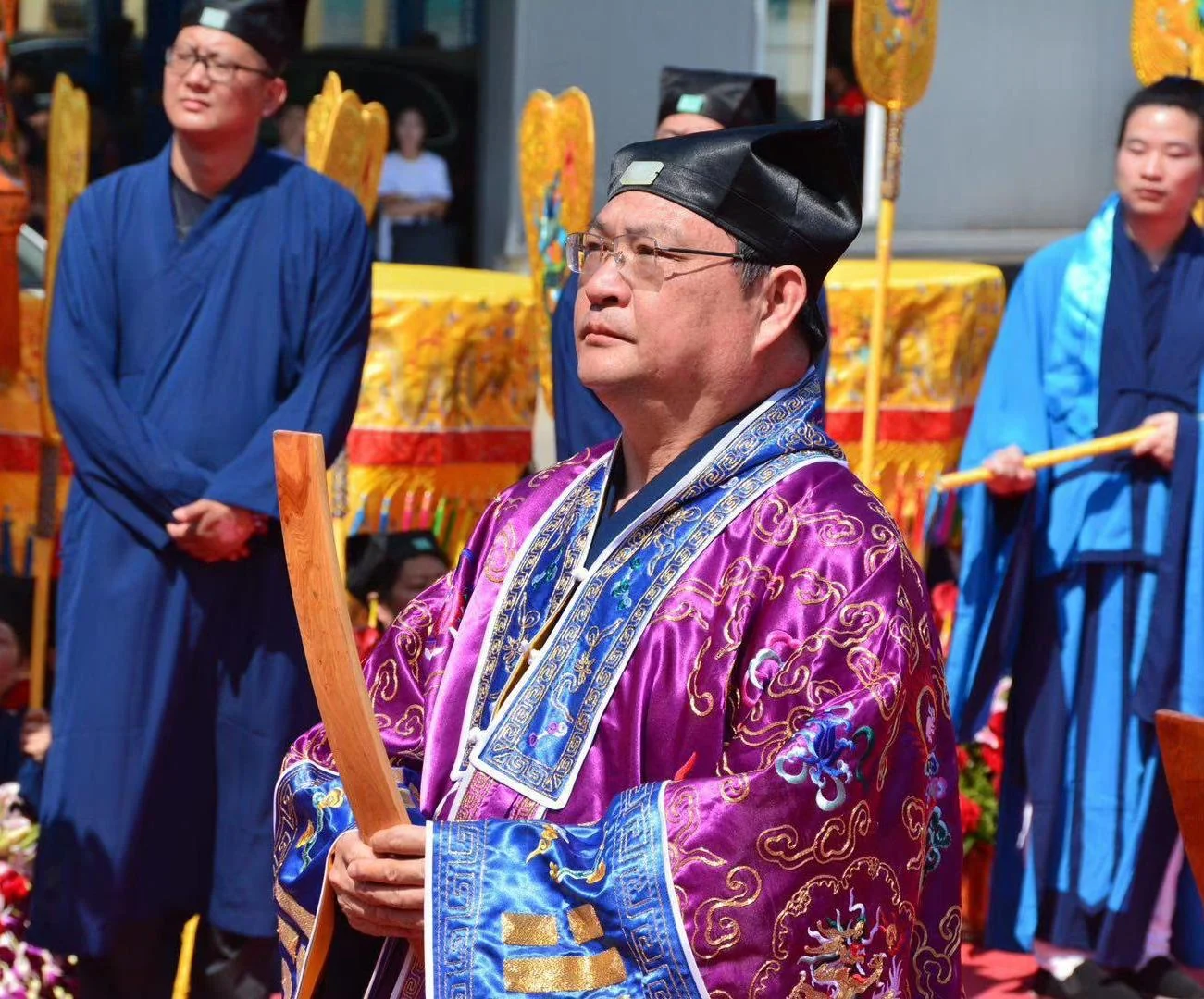
杨世华
Temple care and cultural research
Daoist name Shouheng. His work includes temple renewal, cultural research and teaching. Appointed honorary president of the Jurong Daoist Association in 2023.
 View larger ↗
Public records include temple development, cultural research and teaching visitors. A 2016 Maoshan teaching report and the 2023 appointment report provide dated points of reference.
PEOPLE OF MAOSHAN · Modern era
施觉义
Ritual and musical instruction
The national heritage record names him as a teacher of He Chunsheng in Maoshan liturgy and music. This documented teaching relationship is drawn in the map.
PEOPLE OF MAOSHAN · Modern era
周念孝
Transmission of Maoshan music
Named in the national heritage record as another teacher of He Chunsheng, showing that a practitioner may receive instruction from more than one master.
PEOPLE OF MAOSHAN · Contemporary
何春生
National music heritage bearer
A fifth-batch national intangible cultural heritage bearer for Maoshan Daoist music. Studied with Shi Jueyi and Zhou Nianxiao and has worked in performance, documentation and teaching.
Born in Jurong in 1962, he entered Maoshan at twenty-two and learned ritual and music from Shi Jueyi and Zhou Nianxiao. His work extends from performance to local documentation.
The national heritage archive records his fifth-batch designation, teaching and exchanges. It also provides a photograph, linked below.
PEOPLE OF MAOSHAN · Contemporary
余志成
Jiuxiao Daoren · Fu and calligraphy
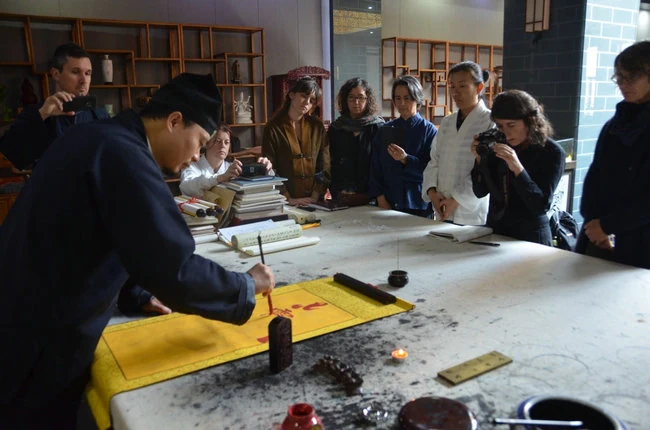
Recognised in Jurong in 2018 as a bearer of Maoshan talisman heritage. The temple recorded his teaching of Swiss visitors that year. Conflicting generation labels are not presented as settled fact.
 View larger ↗
Also known as Jiuxiao Daoren, his practice involves calligraphy and Shangqing talisman writing. The 2018 exchange report documents demonstration and instruction, offering a concrete example of learning through observation and practice.
PEOPLE OF MAOSHAN · Contemporary
郑学进
Maoshan talisman heritage
Named alongside Yu Zhicheng as a Jurong bearer of Maoshan talisman heritage in 2018. Their grouping indicates a shared practice, not a teacher–disciple claim.
PEOPLE OF MAOSHAN · Contemporary
朱世平
Maoshan music heritage
Reported in 2018 as a Jurong representative bearer of Maoshan Daoist music, part of the wider community sustaining this practice.
PEOPLE OF MAOSHAN · Contemporary
何玉洪
Maoshan music heritage
Named with Zhu Shiping in 2018 reporting on Jurong music heritage bearers. Grouped by shared practice without assigning an unverified teacher.
PEOPLE OF MAOSHAN · Contemporary
倪风
Liturgy and cultural exchange
The temple’s 2018 exchange record shows Ni Feng teaching the Sanmao repentance liturgy to Swiss visitors.
PEOPLE OF MAOSHAN · Contemporary
尹信慧
Qianyuan Guan and women practitioners
Chinese Taoist Association reporting credits her with leading Qianyuan Guan’s rebuilding from 1993. This Quanzhen community of women is shown as a distinct tradition on the same mountain, outside the Shangqing register.
Chinese Taoist Association reporting connects the rebuilding of Qianyuan Guan from 1993 with her leadership and the community of women practitioners. Recovery involved worship spaces, everyday accommodation and religious practice.
Qianyuan Guan belongs to the Quanzhen tradition. Placing it beside Maoshan’s Zhengyi temples shows the diversity of religious life on the mountain, without extending the Shangqing numbering into a different lineage.
No matching people. Try a different name or keyword.
The complete register means all forty-five entries in the adopted Maoshan Zhi sequence, supplemented by documented related people. It does not claim to exhaust every Maoshan figure or branch. Sacred tradition, succession, teaching, manuscripts, family and temple affiliations are distinguished.
Electronic transcriptions contain variants and errors. Notes retain Xu Mi / Xu Mu, Li Jinghe (合 / 和), Xue / Sa Ruji, and Liu Zonghe / Zongchang. Numbering follows juan 10–12; divergent popular lists have not been merged into a new sequence.
Contemporary lineage labels, generation names, master registers and association offices use different systems. Unverified links between contemporary figures and the ancient numbered register are not asserted.
Maoshan lies among the hills of Jiangsu, near Jurong. Its importance in Daoist history comes from the people who studied, wrote and practised here—and the generations who kept their work alive.
The name “Shangqing,” often translated as Highest Clarity, first evokes a body of scriptures. Over time, those texts, their teachers and the mountain became inseparable parts of a cultural inheritance.
A place of scripture and contemplation.
A tradition expressed in words, forms and daily practice.
Selected people and turning points in Maoshan’s history. Sacred origins are distinguished from documented events.
Explore the peopleMao Ying · Mao Gu · Mao Zhong
Daoist tradition connects the mountain’s name with three brothers who cultivated the Dao at Mount Juqu. Their stories of retreat and benevolent deeds remain part of Maoshan’s sacred memory.
Source ↗Wei Huacun
Revered as Lady of the Southern Peak, Wei Huacun is a foundational female figure in Shangqing tradition. Later religious accounts place her at the sacred origin of its scriptures.
Source ↗Yang Xi · Xu Mi · Xu Hui
Revelations recorded by Yang Xi, preserved and copied within the Xu family’s circle, formed a foundation of early Shangqing literature. Scripture, calligraphy and contemplative practice became closely intertwined.
Source ↗Tao Hongjing · 456–536
Tao Hongjing retired to Maoshan, collecting and studying earlier Shangqing manuscripts. His writings, including the Zhen’gao, helped establish the mountain as a centre of the tradition. His interests also encompassed medicine and the natural world.
Source ↗Wang Yuanzhi · Pan Shizheng · Sima Chengzhen · Li Hanguang
Teachers connected with the Shangqing tradition carried its learning into wider temple and court networks. Their work extended Maoshan’s influence far beyond a single mountain.
Source ↗Liu Hunkang
During Liu Hunkang’s tenure, imperial patronage enlarged his retreat as Yuanfu Guan. Further expansion created Yuanfu Wanning Palace, an enduring landmark of Maoshan’s religious history.
Source ↗Zhang Yucai · Liu Dabin
In 1304, Zhang Yucai received charge of the Three Mountains’ talismanic registers, bringing Maoshan into a wider Zhengyi structure. Liu Dabin’s Maoshan Zhi preserved accounts of the mountain’s places, figures and traditions.
Source ↗Jiuxiao Wanfu Palace
The name Jiuxiao Wanfu Palace dates to an imperial building campaign in 1598. Temples, inscriptions and ritual spaces became repositories of successive generations of devotion and rebuilding.
Source ↗Restoration from 1982
War and interruptions to religious life caused extensive damage. Restoration from 1982 gradually renewed Maoshan Daoyuan’s temples and its living religious community.
Source ↗Learning · Ritual · Art · Exchange
The mountain’s heritage is carried forward through teaching, brushwork, temple care and cultural exchange. Explore the people, teachings and practices that continue the story today.
The living tradition ↓Texts to study.
Practices to understand.
A place to care for.
From the early Shangqing manuscripts to Tao Hongjing’s compilations and Liu Dabin’s gazetteer, written records allow later generations to encounter earlier voices.
Enter the Classics RoomContemplation, recitation and ritual give the tradition its lived setting. The art of fu belongs within that wider world of learning and practice.
Explore the art of FuTemple spaces, remembered places and the care of a community connect the written tradition with a physical landscape. Heritage continues through that daily attention.
The steps. The trees.
The light between temples.
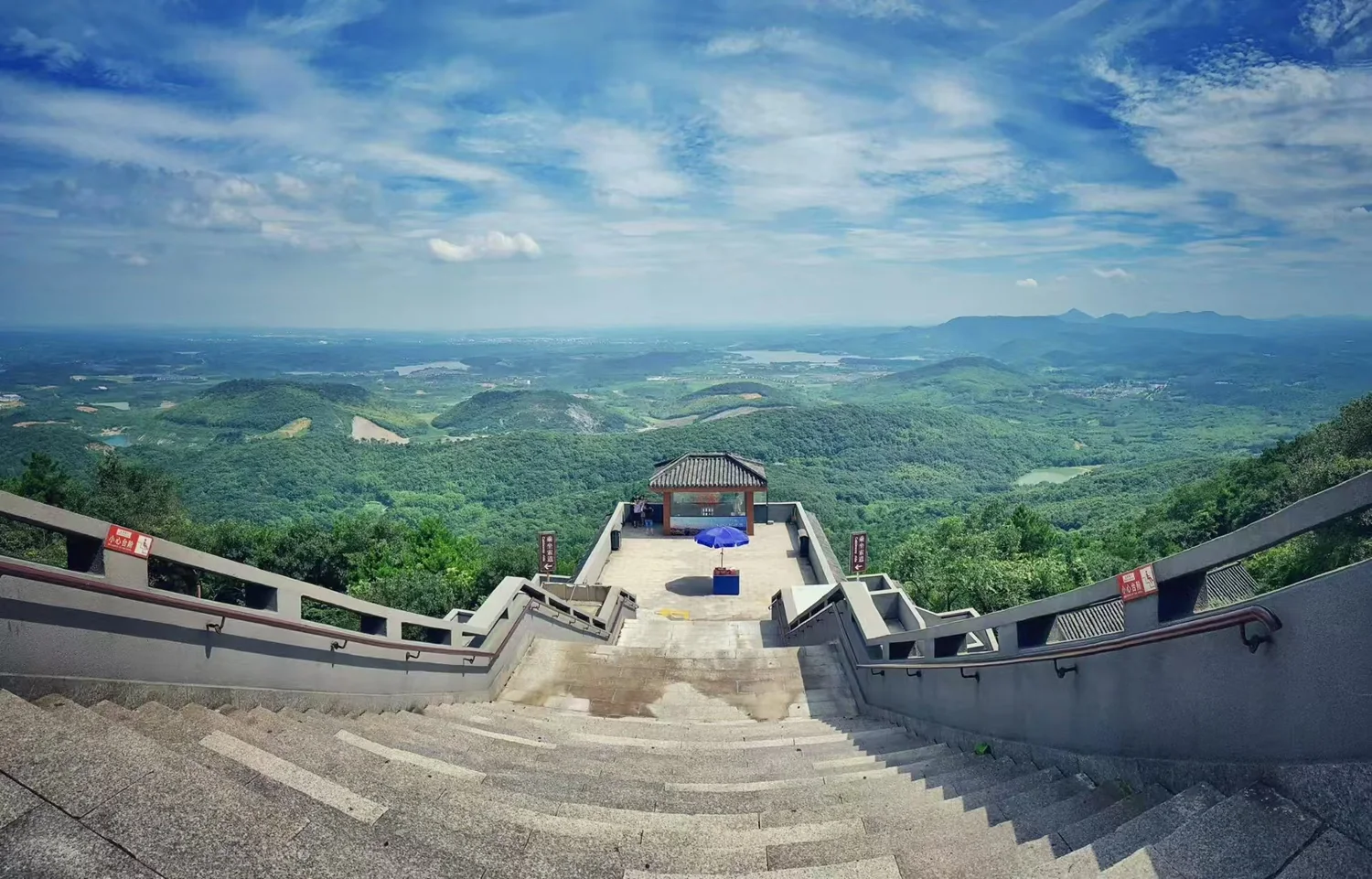
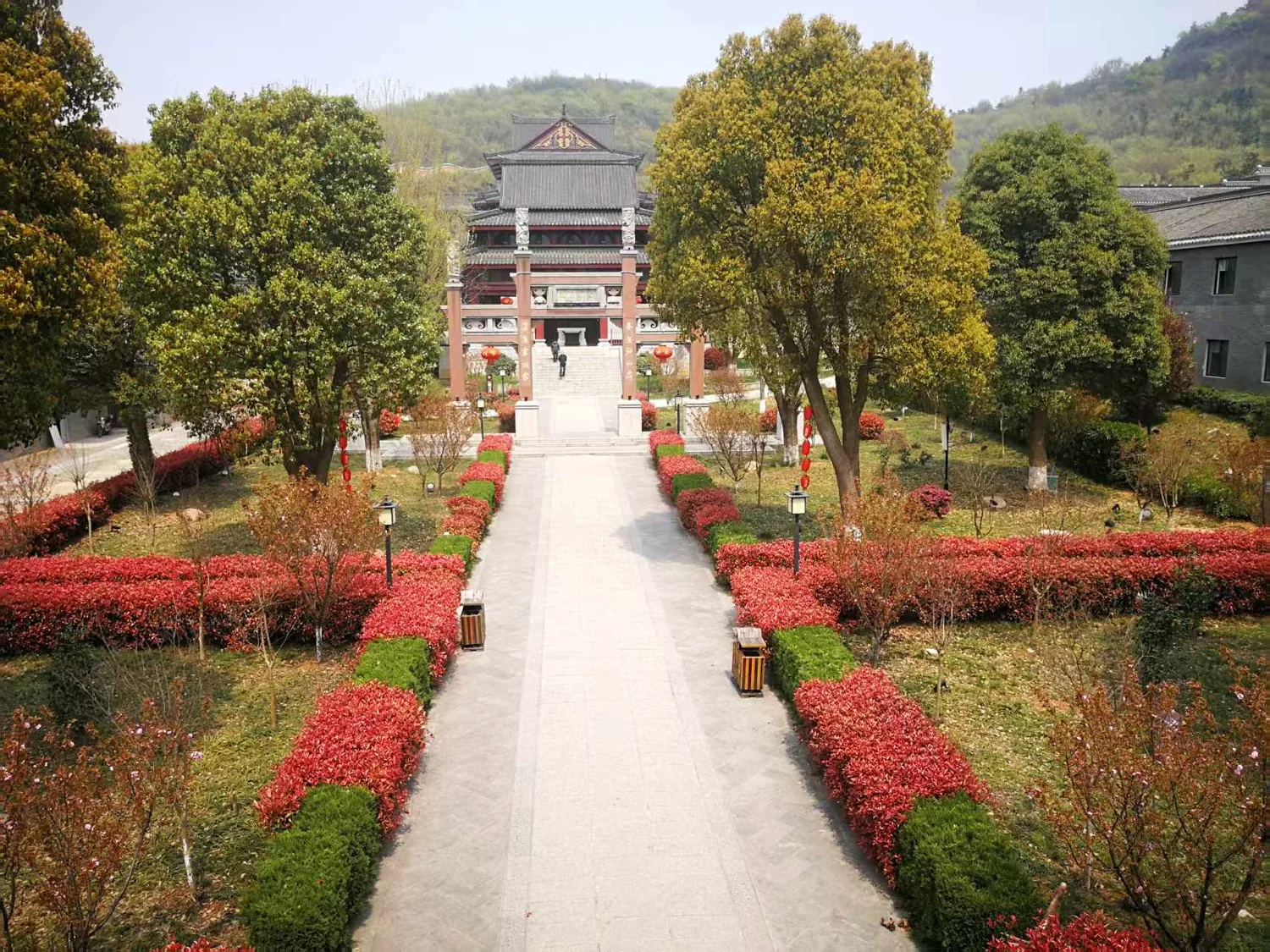
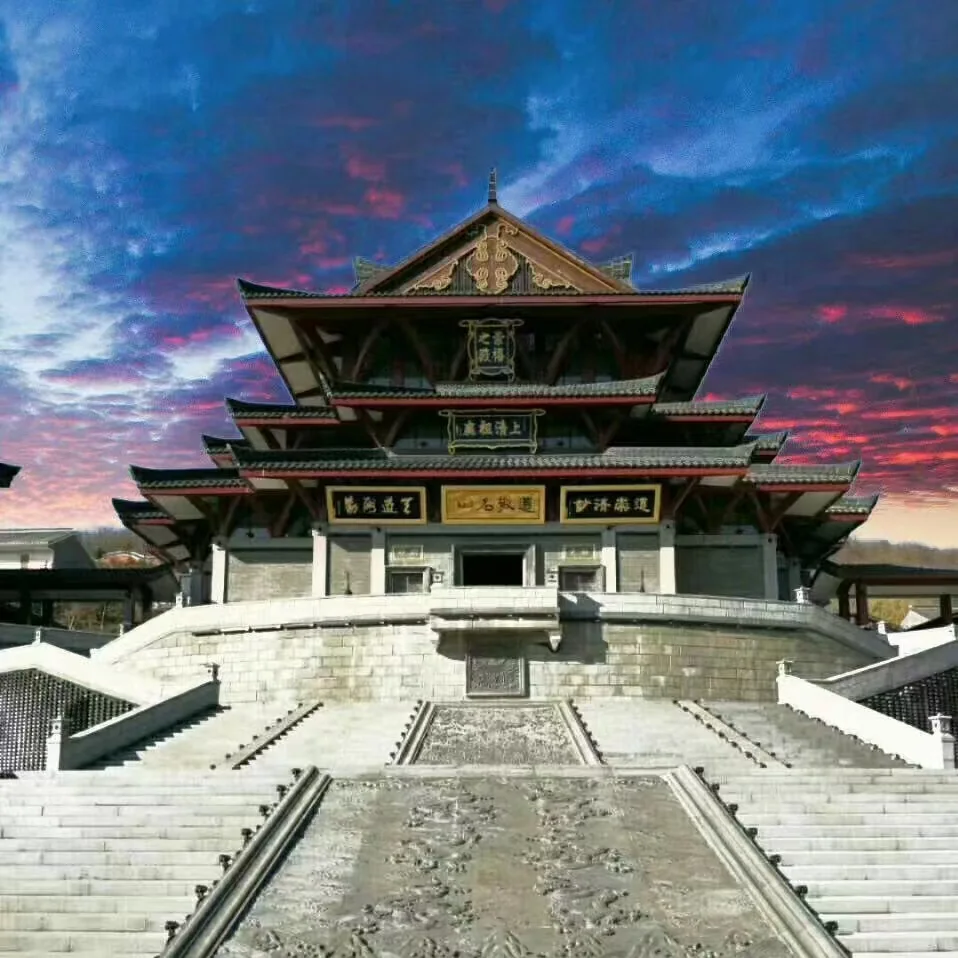
An original moment in temple life. Observe the setting, dress and gestures of a communal ritual.
Explore ritual lifeA mountain view, a room for study, an object held in the hand. These images bring the written story into the world of places and people.
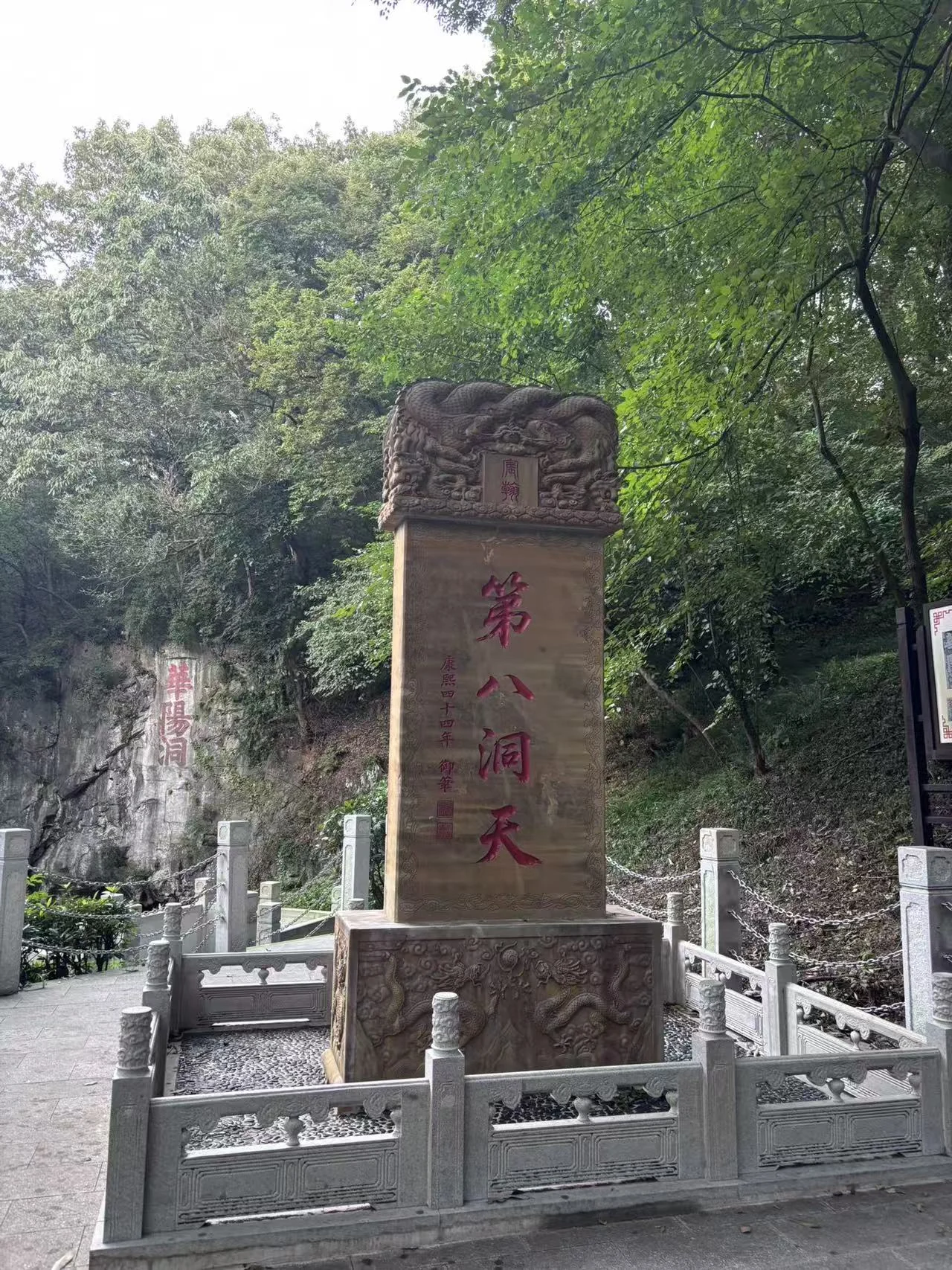
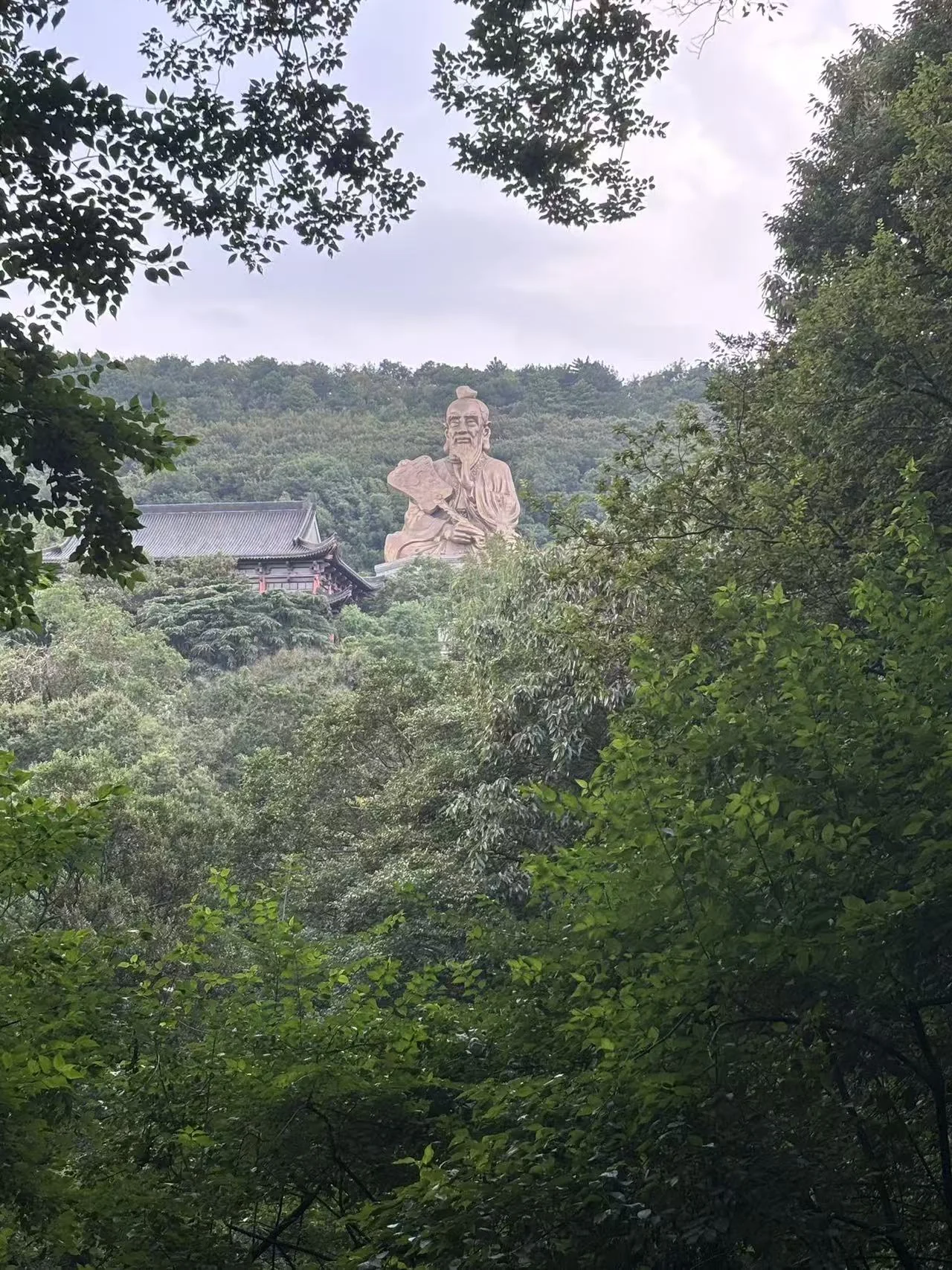
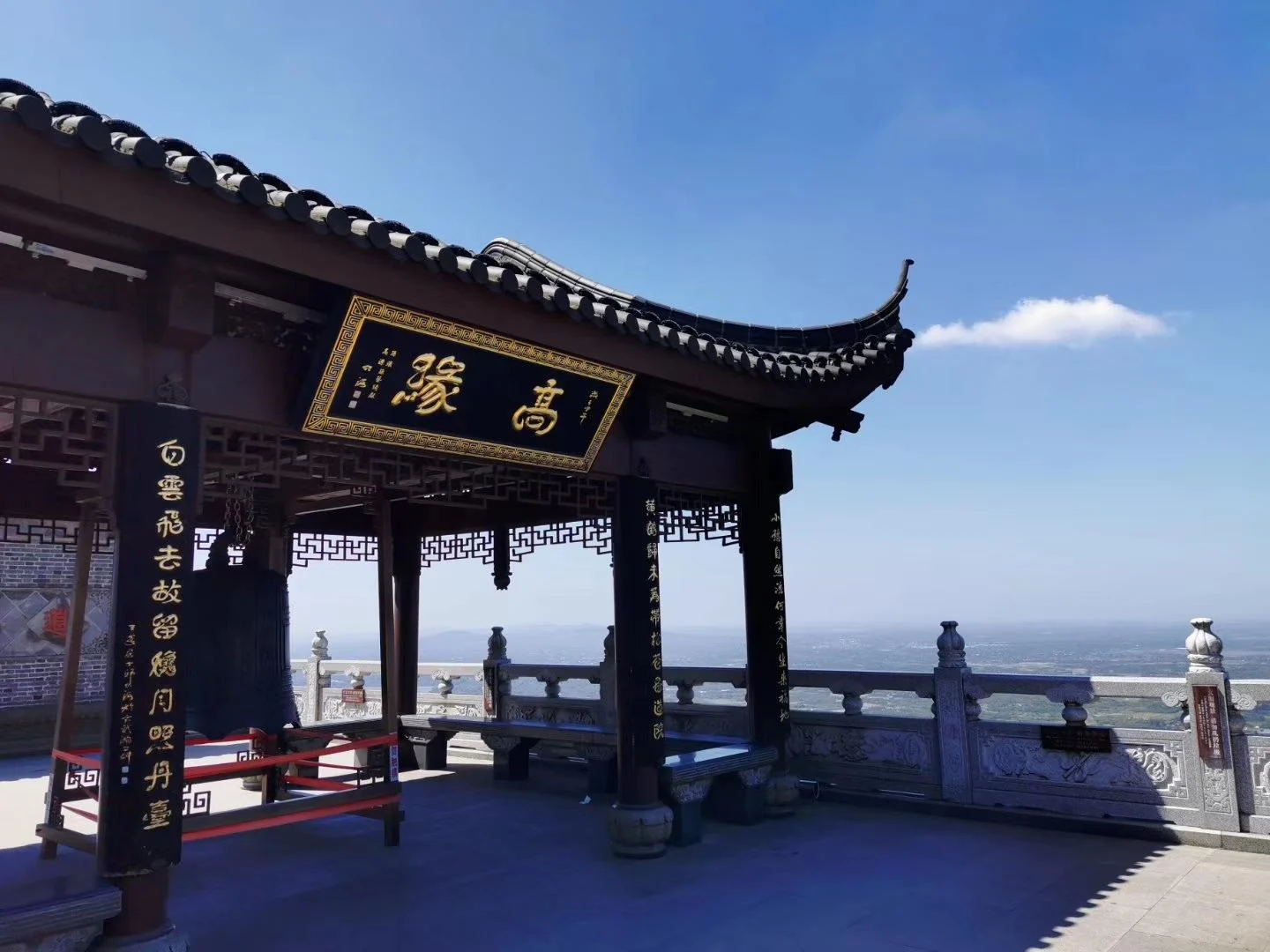
These views connect a distant ridgeline with the close detail of a temple terrace. Halls, inscriptions and paths give Maoshan’s history a physical setting: a place to walk, pause and look again.
Explore the mountain in photographs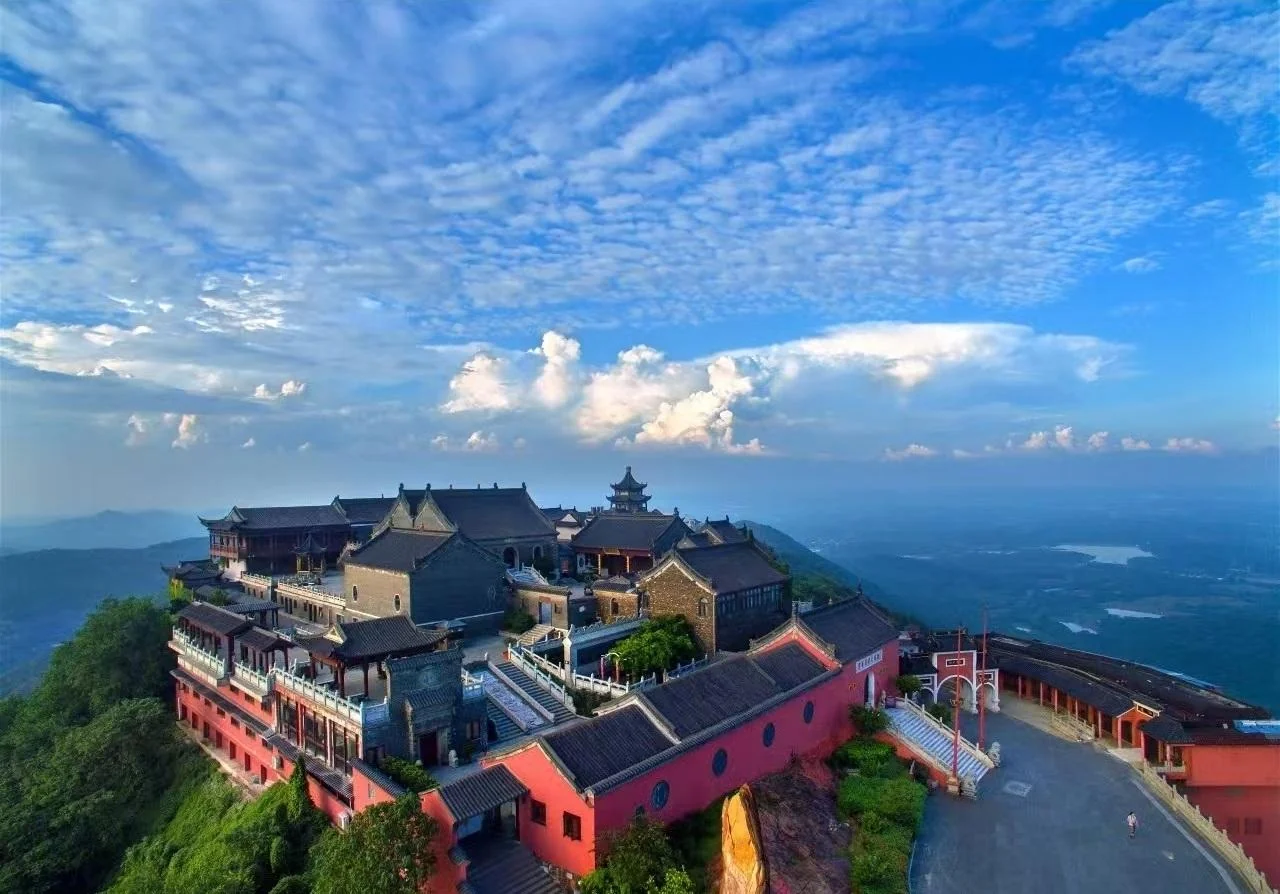
Texts are one part of a living tradition. Conversation, shared reading and time spent with teachers give them a social life. The archive includes this classroom scene alongside materials about everyday self-cultivation, opening a path into the culture through learning and discussion.
Discover cultural learning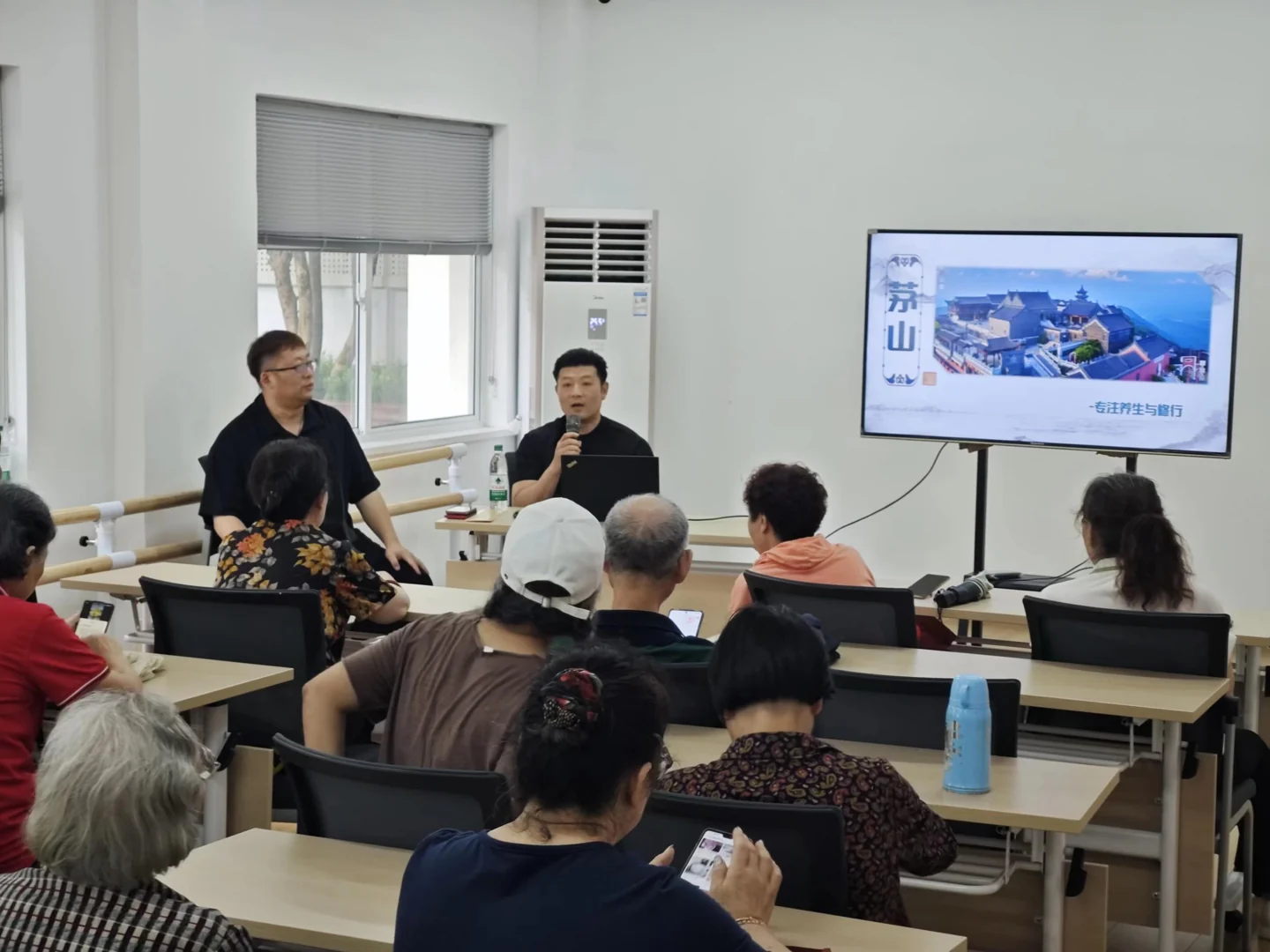
Calligraphy and carved ornaments carry stories through line, shape and touch. Caishen imagery also opens a conversation about prosperity, integrity, contentment and shared life. These images express human wishes, opening a conversation about what a good life can mean.
Explore symbols in The Art of Fu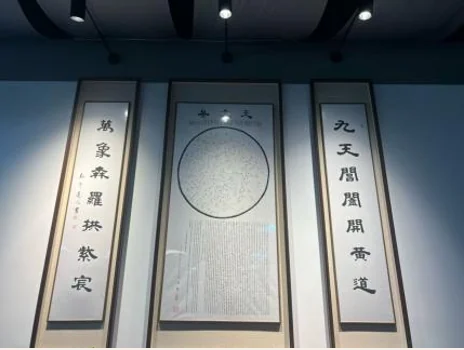
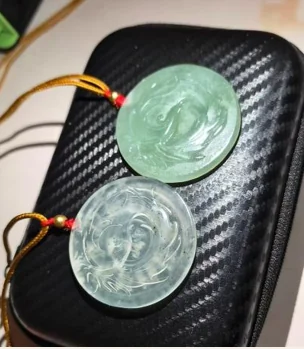
The photographs are reproduced from two supplied cultural presentations: “Maoshan: Historical Roots and Traditional Culture” (pp. 5, 15) and “The Shangqing Maoshan Lineage and Cultural Works” (p. 30). The final story also draws on the cultural themes of the supplied Caishen exhibition concept.
This introduction draws on publications from Maoshan Daoyuan, historical texts, academic research and documented contemporary reports. Traditional religious accounts are presented as traditions, alongside historical milestones.
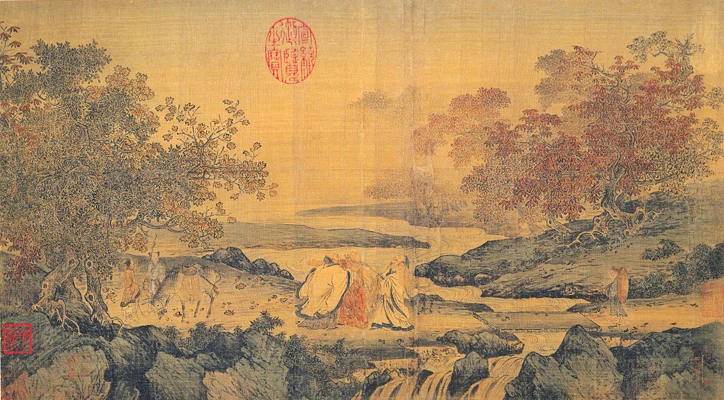
The opening ink landscape is an artistic interpretation. Temple photographs and film come from the supplied archive. Historical illustrations carry individual source notes in the profiles; later depictions are distinguished from documentary photographs.